Pet Behavior Analysis Tool
Answer three quick questions about what your dog is doing and when. You’ll get the most likely cause, a practical plan you can print, the warning signs that mean it’s time to call a professional, and a simple tracker to see if things are improving.
Last updated October 2026
- Behavior
- Situation
- History
- Your plan
What is your dog doing?
How this behavior analysis works
The same behavior can have very different causes. A dog barking at the window and a dog barking when left alone need completely different plans. The tool asks what your dog does, when it happens, and whether it’s new. Those three answers usually point to the most likely cause.
It follows the approach behavior professionals use: rule out medical causes first, understand the motivation, manage the environment so the behavior can’t keep being rewarded, then teach an alternative behavior with positive reinforcement.
Track progress, not perfection
Behavior change is gradual, and it’s easy to lose heart on a bad day. After your analysis, use the progress tracker to log how many times the behavior happens each day. After four days you’ll see whether it’s improving, staying the same, or temporarily getting worse (often a normal “extinction burst” when an old habit stops working). Your log is saved privately in your browser. You can also print your plan with a 14-day log sheet to stick on the fridge, so everyone in the household follows the same rules.
Common dog behavior problems explained
🗣️ Barking a lot
Barking is communication. The fix depends on what your dog is trying to say.
- At people, dogs or noises outside: Alert or territorial barking. Your dog thinks they’re guarding the home.
- When they want something from me: Demand barking. It worked before, so your dog keeps trying.
- When I leave the house: Possible separation-related distress.
- Seemingly at nothing / out of boredom: Under-stimulation. Barking is self-entertainment.
How to stop excessive barking →
🦘 Jumping up or over fences
Jumping is usually excitement or a quest for something on the other side.
- On people when greeting: Excited greeting. Dogs greet face-to-face, and jumping gets attention.
- Over or at the fence: Escape motivation: boredom, chasing wildlife, seeking other dogs, or fear of something in the yard.
- On counters and tables: Counter-surfing. It has paid off with food at least once.
How to stop your dog from jumping →
🦷 Biting or nipping
Puppy mouthing is normal. Biting in an adult dog needs a closer look.
- Puppy nipping hands and clothes: Normal play and teething. Puppies explore with their mouths.
- When touched, handled or near food/toys: Resource guarding or discomfort with handling, sometimes pain.
- At strangers or other dogs: Usually fear: the dog wants the scary thing to go away.
How to stop a dog from biting →
🧦 Chewing things
Chewing is a natural need. The goal is to point it at the right things.
- Puppy under 1 year: Teething and exploration.
- Mostly when left alone: Boredom or separation-related stress.
- Random household items any time: Lack of appropriate chew outlets or attention-seeking.
How to stop a dog from chewing →
🕳️ Digging
Many dogs, especially terriers and northern breeds, are born to dig.
- Shallow holes all over the yard: Entertainment, or hunting insects and rodents.
- Under the fence: Escape motivation.
- Cool holes in the shade on hot days: Temperature regulation.
11 ways to stop your dog digging →
😢 Whining
Whining signals a need: attention, excitement, stress or pain.
- In the crate or at night: Needs a toilet break, or isn’t yet comfortable in the crate.
- For attention or food: Learned demand behavior.
- When stressed, or with no obvious reason: Anxiety or possible pain.
Why dogs whine and how to stop it →
💩 Eating poop
Coprophagia is gross but common, especially in puppies.
- Their own, or other dogs’: Often habit, scavenging instinct, or learned from cleaning up as a puppy. Sometimes diet-related.
- Cat litter box: Cat feces are high in protein and very attractive to dogs.
- Wildlife or horse poop on walks: Scavenging. It smells like food.
How to stop a dog eating poop →
🐾 Licking paws
Occasional licking is grooming. Constant licking usually has a cause.
- Red, brown-stained or smelly paws: Likely allergy or skin/yeast infection.
- One paw only, or limping: Possible injury, splinter, broken nail or cyst.
- Healthy-looking paws, licks when bored/alone: Boredom or anxiety licking.
Why dogs lick their paws (and how to stop it) →
🚽 Peeing or pooping indoors
Indoor accidents are about training, marking, stress or health.
- Puppy or newly adopted dog: Incomplete house training.
- Small amounts on vertical objects: Urine marking.
- House-trained adult suddenly having accidents: Often medical: urinary infection, kidney issues, diabetes, or age-related.
The complete potty training guide →
🦮 Pulling on the leash
Dogs pull because pulling gets them where they want to go.
- Constantly, from the start of the walk: Pulling has been reinforced, and humans walk slowly!
- Lunges at dogs, people or cars: Reactivity, often fear or frustration.
😟 Fearful or anxious
Fear is an emotion, not disobedience. Build confidence and safety first.
- Loud noises (fireworks, storms): Noise sensitivity. See our fireworks anxiety guide and sound desensitization player.
- New people, places or dogs: Limited socialization or genetic shyness.
- Being left alone: Separation-related distress.
Separation anxiety in dogs: step-by-step plan →
⚠️ Growling or aggression
Growling is a warning, so don’t punish it. Find out what it’s about.
- Around food, bones or toys: Resource guarding.
- When touched or picked up: Pain or handling sensitivity.
- Toward other dogs or strangers: Fear or frustration.
How to stop a dog from biting →
When to get professional help
- Any bite that breaks skin, or aggression toward children
- A sudden change in behavior, especially in a senior dog
- Behavior combined with physical symptoms such as limping, vomiting, changes in thirst or appetite, or hiding
- Self-injury, such as licking until sores form or breaking teeth on a crate
- No improvement after 2–3 weeks of consistent training
This tool offers general education, not a diagnosis. Your veterinarian is always the best first stop for a sudden or worrying change.
Frequently asked questions
What is a pet behavior evaluation?
A behavior evaluation looks at what a dog does, when and where it happens, and what happens right before and after. Trainers call this the “ABC” (antecedent, behavior, consequence). This tool walks you through a simplified version so you can spot the most likely cause and start on the right plan.
Should I see a vet or a trainer for a behavior problem?
Start with your vet if the behavior is new, sudden, involves aggression, or comes with any physical signs: limping, changes in appetite or thirst, vomiting, or hiding. For long-standing training issues in a healthy dog, a certified positive-reinforcement trainer is a great next step. For severe fear or aggression, look for a veterinary behaviorist or a certified behavior consultant (CAAB, DACVB, IAABC or CCBC).
Why shouldn’t I punish my dog for bad behavior?
Punishment can stop a behavior in the moment but doesn’t teach what to do instead, and it can add fear, which makes many problems worse. Major veterinary behavior organizations, including the American Veterinary Society of Animal Behavior (AVSAB), recommend reward-based methods for all training.
How long does it take to change a dog’s behavior?
Simple habits like jumping on guests often improve noticeably within 2–3 weeks of consistent practice. Fear, reactivity and separation-related problems usually take months. Progress is rarely a straight line, so track small wins.
Tool and guide written with AI assistance. Last updated: October 2026.How we create our content
Related guides
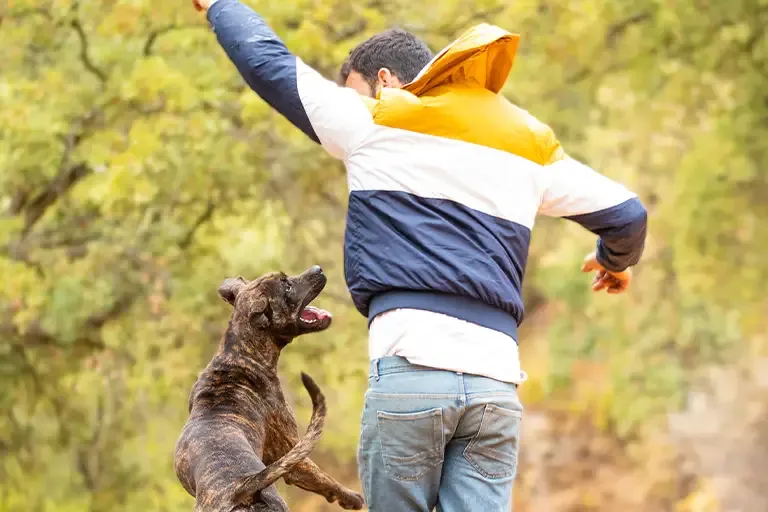
How to Stop Your Dog From Jumping: Fences, People & Counters
How to stop a dog jumping: fence-proofing with extensions and coyote rollers, calm greetings so your dog stops jumping on people, and counter-surfing fixes.
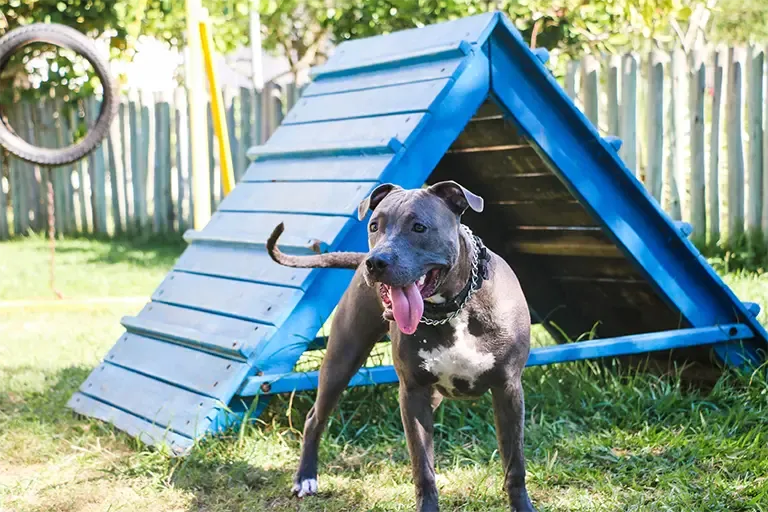
How to Stop a Dog From Biting: Causes, Warning Signs and a Safe Plan
How to stop a dog from biting: why adult dogs bite, the warning signs before a bite, a safe step-by-step plan, and what to do around food, toys and children.
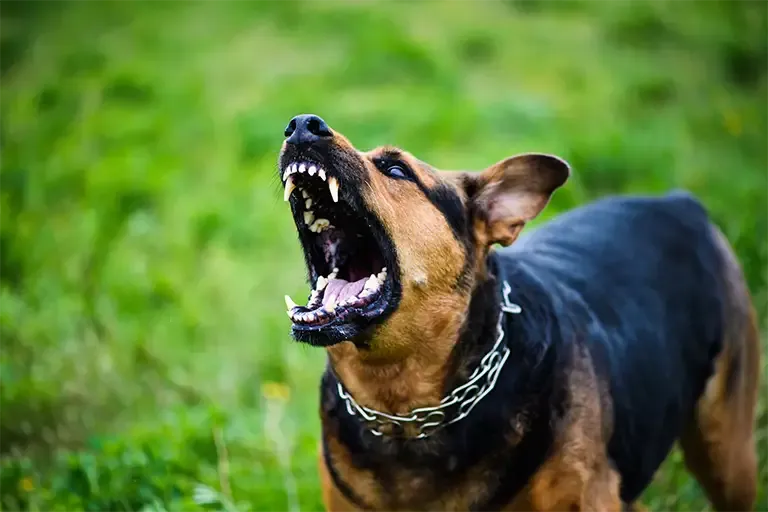
How to Stop a Dog From Barking: A Plan for Every Type of Barking
How to stop excessive barking: find the type (alert, demand, boredom, fear or separation) and follow the plan for barking at the door and at night.
More free dog tools
Sound Desensitization Player
Help your dog get used to fireworks, thunder and the doorbell.
Calming Music & Sounds for Dogs
Soft piano, brown noise, rain and heartbeat with a sleep timer.
Online Dog Clicker
A free training clicker with counter and session timer.
Dog Age Calculator by Breed
Convert your dog’s age to human years, adjusted for size.
Dog Food Calculator
Daily calories and cups for your dog’s weight and age.
Puppy Weight Calculator
How big will your puppy get? Estimate adult weight.
Can My Dog Eat This? Food Checker
Search 100+ foods: safe, small amounts only, or toxic.
Dog Chocolate Toxicity Calculator
Did your dog eat chocolate? Check the risk in seconds.
Dog Name Generator
Find the perfect name by style, gender and personality.
Dog Whistle Frequency Simulator
Play adjustable high-frequency whistle tones in your browser.
Glossary for Dog Training
Plain-English definitions of common training terms.