How to Stop a Dog From Chewing Everything: A Practical Guide
How to stop a dog chewing everything: puppy teething, boredom and stress, plus quick fixes for furniture, shoes, cords, fabric, carpet and their own bed.
· Updated · 4 min read
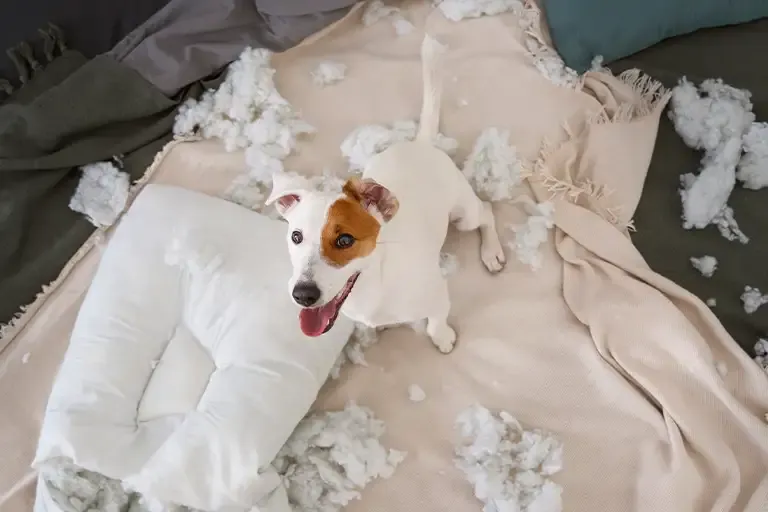
Chewing is a normal, healthy dog behavior. It cleans teeth, relieves teething pain, burns energy and calms stress. The problem isn’t chewing; it’s chewing the wrong things: your shoes, sofa, skirting boards and phone charger.
You won’t stop a dog from chewing, but you can teach them what to chew.
Quick answer: how to stop destructive chewing
- Dog-proof: put shoes, cables, remotes and kids’ toys out of reach.
- Provide better options: a variety of chews, rotated so they stay interesting.
- Trade, don’t chase: swap forbidden items for an approved chew and praise.
- Meet exercise and enrichment needs every day.
- Supervise or confine when you can’t watch.
- Use taste deterrents on things that can’t be moved.
- Check for stress or separation anxiety if chewing happens mainly when alone.
Why do dogs chew?
| Reason | Typical signs | Fix |
|---|---|---|
| Teething (3–7 months) | Puppy chews everything, sore gums, lost teeth | Cold and soft chews, puppy-proofing |
| Exploration | Young dogs chewing new objects | Supervision, trade games |
| Boredom | Chewing when under-exercised or alone in quiet periods | More exercise and enrichment |
| Stress / separation distress | Chewing at doors, windows, crates; only when alone | Gradual alone-time training, professional help |
| Hunger or dieting | Targets food-related items, bins | Review diet, puzzle feeders |
| Attention | Grabs items and runs, especially when ignored | Reward calm, avoid chase games |
The 5-step plan
1. Manage the environment
Prevention is the fastest win. Every successful chew of a forbidden item makes the habit stronger.
- Keep shoes in closets, laundry in hampers and cables hidden.
- Use baby gates to keep your dog in dog-proofed rooms.
- Use a crate or pen with chews when you can’t supervise. See our crate training guide.
2. Give great alternatives
Dogs have preferences, so offer variety:
- Rubber food toys (stuffed with kibble and wet food, then frozen)
- Firm rubber or nylon chews sized for your dog
- Edible chews like bully sticks or dental chews, supervised
- Soft toys for gentle chewers
- Frozen carrots or a frozen wet washcloth for teething puppies
Rotate toys every few days so they feel new.
3. Teach the difference
When your dog picks up something they shouldn’t:
- Stay calm. Don’t chase; that turns it into a game.
- Offer a trade: a treat or a better chew.
- When they drop it, say “yes!”, give the reward, and calmly remove the item.
- Praise them whenever they chew their own toys.
Teaching “drop it” and “leave it” makes this much easier. Find both in our training glossary.
4. Exercise body and brain
A tired dog chews less. Aim for daily walks with sniffing time, play like fetch and tug, food puzzles and snuffle mats, and short training sessions. Most destructive chewing in adolescent dogs drops significantly with more mental exercise.
5. Address stress
If chewing happens mainly when your dog is alone, especially at doors, windows or crate bars, it may be separation-related distress. Record your dog, practice very short absences (see our separation anxiety guide), and talk to your vet or a qualified behavior professional.
How to stop a dog chewing specific things
Furniture and wood
Apply a bitter taste deterrent to legs and corners (test on a hidden spot first), block access when unsupervised, and give a wooden-textured alternative like a firm chew. Keep sticks short on walks: wood splinters can injure the mouth and gut.
Shoes
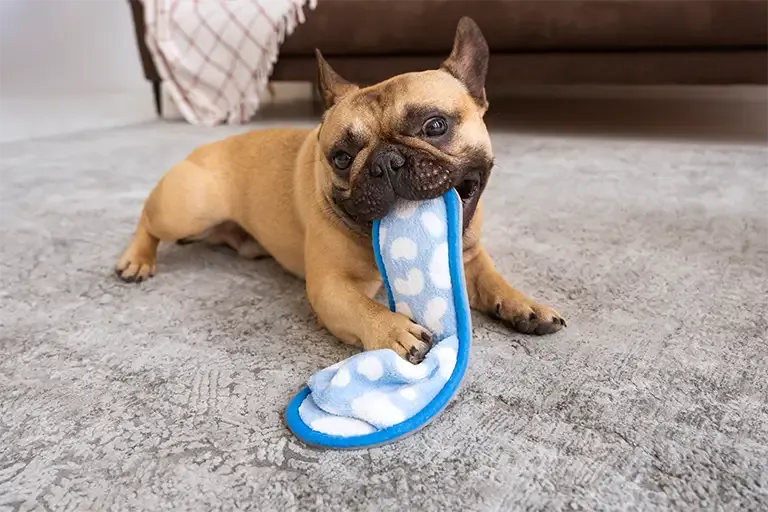
Shoes smell strongly of you, which makes them irresistible. Store them in a closed cupboard or rack, never give old shoes as toys (dogs can’t tell old from new), and trade for a chew whenever your dog grabs one.
Electrical cords
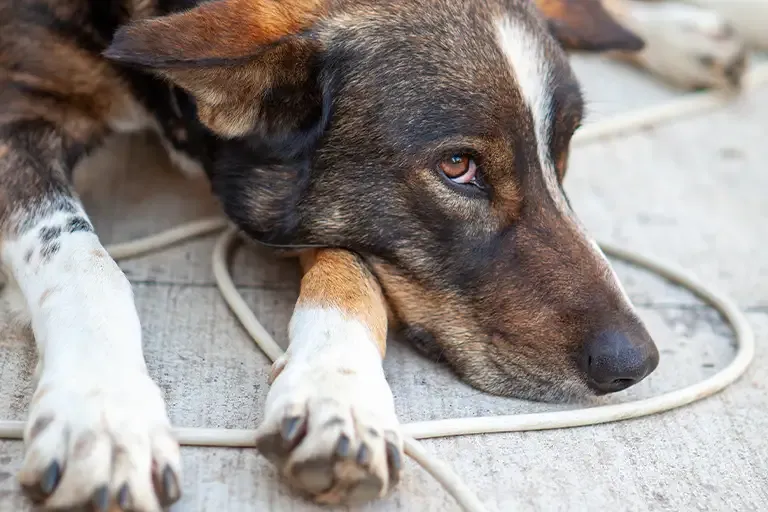
Chewing live cords can cause burns and electrocution. Hide cords behind furniture, use cord protectors or cable boxes, unplug when not in use, and apply a taste deterrent. Puppies should be supervised or confined around cords.
Fabric, blankets and clothes
Remove access to clothing and towels, provide durable soft toys for supervised play, and watch for signs of swallowing. Eating fabric can cause intestinal blockages and needs veterinary attention.
Carpet and rugs
Roll up rugs during the puppy months, use gates, and give a textured chew mat or snuffle mat instead. Chewing in one spot can mean food was spilled there, so clean thoroughly.
Their own bed
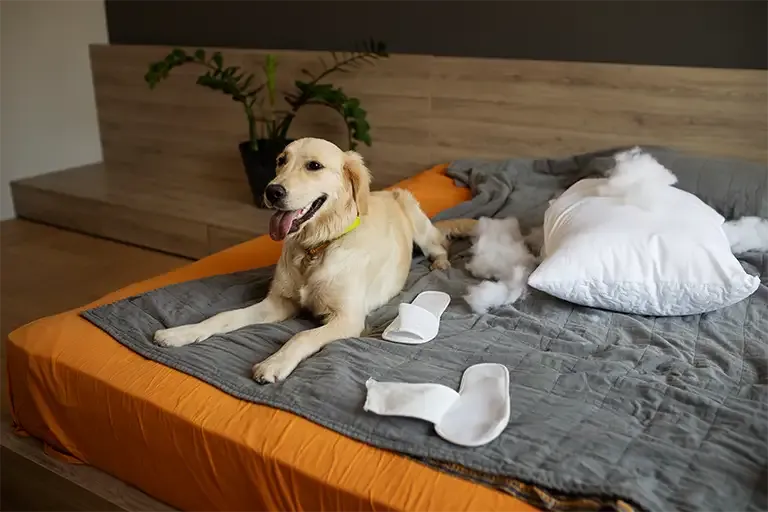
Bed-chewing is common in puppies and bored dogs. Try a chew-resistant bed or a raised cot-style bed, give a chew at bedtime, and make sure your dog is tired before rest periods.
Their own paws or tail
Chewing their own body isn’t a training problem. It’s usually itching, pain or anxiety. See why dogs lick and chew their paws and check with your vet.
What not to do
- Don’t punish after the fact. Dogs can’t connect a scolding to chewing done earlier.
- Don’t chase your dog to get things back.
- Don’t give very hard chews (cooked bones, antlers, hooves) that can fracture teeth.
- Don’t leave a chewer alone with toys that can be shredded and swallowed.
Related guides and tools
- Pet behavior analysis tool
- How to stop a dog from digging
- How to stop puppy biting
- Choosing the right dog crate
Frequently asked questions
At what age do puppies stop chewing everything?
Teething usually ends by about 6–7 months, when the adult teeth are in. Many dogs go through a second chewing phase between 6 and 12 months as the teeth settle into the jaw. Chewing itself is a lifelong need, so the goal is redirecting it, not stopping it.
Why does my adult dog suddenly chew things?
Common causes are boredom, too little exercise, stress, separation-related distress, or a change in routine. Sudden chewing can also be linked to dental pain, nausea or hunger. If it’s new, consider a vet check.
Does bitter apple spray work?
Taste deterrents work for some dogs, especially on furniture legs and cords, but some dogs don’t mind the taste. Use them alongside management and appropriate chews, not instead.
How do I stop my dog chewing when I’m not home?
Confine your dog to a dog-proofed room, pen or crate with safe chews, exercise them before you leave, and give a long-lasting food toy as you go. If chewing is focused on doors and windows or comes with howling or house soiling, it may be separation anxiety. Speak to your vet or a behavior professional.
What are the safest chews for dogs?
Choose chews that dent when you press a thumbnail into them: rubber toys like Kongs, firm rubber or nylon chews sized for your dog, and edible chews appropriate for your dog’s size, always supervised. Avoid cooked bones, antlers, hooves and very hard chews, which can break teeth.
Why does my dog chew fabric and blankets?
Fabric chewing or sucking can be self-soothing (especially in dogs weaned early), a sign of boredom or anxiety, or occasionally pica. Swallowed fabric can cause dangerous blockages, so remove access and see your vet if your dog eats fabric.
Note: This article is for general information and isn’t a substitute for advice from your veterinarian. Some links may be affiliate links; we may earn a commission at no extra cost to you.Written with AI assistance. Editorial review in progress. Last updated: . How we create our content