How to Potty Train a Dog: A Complete Step-by-Step House Training Guide
How to potty train (house train) a puppy or adult dog: a step-by-step plan, a daily schedule, how long it takes, night-time tips, and handling accidents.
· Updated · 7 min read
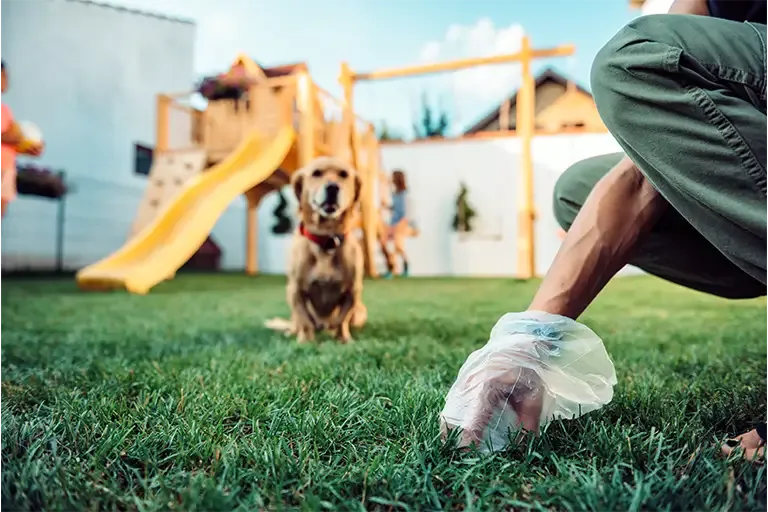
Potty training (also called house training, housebreaking or toilet training) is the first big project for most new dog owners. The good news: dogs naturally avoid soiling their sleeping area, and they learn quickly when you make the right choice easy and rewarding.
This guide works for puppies and adult or rescue dogs.
Quick answer: how to potty train a dog
- Set a schedule: take your dog out first thing, last thing, after meals, naps and play, and every 1–2 hours for young puppies.
- Go to the same spot every time, on leash, and stay boring until they go.
- Reward within 2 seconds of them finishing: a treat and praise, outside, on the spot.
- Supervise or confine: when you can’t watch, use a crate or a puppy-proof pen.
- Interrupt accidents calmly, take them straight outside, and clean with an enzymatic cleaner.
- Never punish. It teaches hiding, not house training.
How long does potty training take?
| Dog | Typical timeline |
|---|---|
| Puppy, 8–12 weeks | Frequent accidents are normal; the bladder is tiny |
| Puppy, 4–6 months | Most are reliable with a consistent routine |
| Small breeds | Often take longer, sometimes up to 9–12 months |
| Adult / rescue dog | Often 1–2 weeks with a strict schedule |
Puppies don’t have full bladder control until around 4–6 months. Before then, accidents are about physiology, not stubbornness.
Step 1: Understand your puppy’s needs
Puppies usually need to go:
- Right after waking up (morning and after every nap)
- 5–30 minutes after eating
- After drinking a lot of water
- During or after play and excitement
- After chewing a toy for a while
- When they start sniffing the floor, circling or wandering off
A handy rule for daytime gaps: age in months + 1 = maximum hours your puppy can wait. A 2-month-old can manage about 2–3 hours, and less when active.
Step 2: Create a daily schedule
Here’s a sample schedule for a 10–16-week-old puppy:
| Time | Activity |
|---|---|
| 6:30 | Wake up → straight outside |
| 7:00 | Breakfast → outside 10–20 min later |
| 7:30 | Play / training → outside |
| 8:00–10:00 | Nap in crate → outside on waking |
| 10:30 | Play, chew → outside |
| 12:00 | Lunch → outside |
| 12:30–14:30 | Nap → outside on waking |
| 15:00 | Walk / socialization outing |
| 17:00 | Dinner → outside |
| 18:00–20:00 | Family time, short naps → outside every hour |
| 21:00 | Water away ~2 hours before bed |
| 22:30 | Last trip outside → bed |
| Night | 1–2 quiet trips for young puppies |
Step 3: Choose a potty spot and a cue
Always take your dog to the same spot on a leash. Familiar smells encourage them to go. Stand still and be boring. As they start to go, say a cue word like “go potty” or “be quick”. Over time it becomes a reliable request, which is handy before car trips and bedtime.
Step 4: Reward the right thing, fast
Rewards must come immediately: within about 2 seconds of finishing, outside. Waiting until your puppy runs back to the door means you’re rewarding the run back, not the pee. Keep treats in your pocket or by the door.
After they go, a short play session or sniff walk is a great bonus reward. If you always rush back inside, some dogs learn to delay so the outing lasts longer.
Step 5: Use a crate (or pen) for downtime
A crate taps into your dog’s natural instinct to keep their den clean. It should be just big enough to stand, turn around and lie down. Too big, and they can toilet in one end.
Crates must be introduced positively and never used as punishment. Puppies shouldn’t be crated longer than they can hold their bladder. See our step-by-step crate training guide and our dog crate buying guide.
Step 6: Supervise like a hawk
Most accidents happen when no one is watching. While your dog is loose in the house:
- Keep them in the same room as you, using baby gates or closing doors.
- Try tethering: a leash clipped to your belt.
- Watch for warning signs like sniffing, circling and heading off behind furniture.
- When you can’t supervise, use the crate or pen.
How to handle accidents
- If you catch them mid-act, calmly interrupt (“oops!”), scoop them up or lead them outside, and reward if they finish there.
- If you find it afterwards, just clean it up. Your dog can’t connect a scolding to something they did minutes ago.
- Clean with an enzymatic cleaner. Regular cleaners leave smells that dogs can detect, which draws them back to the same spot. Avoid ammonia-based products, which smell like urine to dogs.
- Look for the pattern. Was it too long between breaks? Right after play? Adjust the schedule.
Excited peeing and submissive peeing
Some dogs, especially young puppies, leak a little urine when they greet people, get excited, or are bent over or scolded. This isn’t a house training failure. It’s a bladder control and emotion issue, and most puppies grow out of it.
- Keep greetings low-key. Ignore your dog for the first minute when you come home, then greet calmly once they settle.
- Greet outside or on a washable surface while you work on it.
- Crouch sideways instead of leaning over your dog, avoid direct eye contact, and pet under the chin rather than on top of the head.
- Never scold. It makes submissive peeing worse.
- Give a job: ask for a sit or toss a few treats on the floor when guests arrive.
If it continues past about a year, or your adult dog dribbles urine at other times, see your vet to rule out a medical cause.
Night-time potty training
- Remove water about 2 hours before bed (unless your vet advises otherwise or it’s very hot).
- Take your puppy out right before bed.
- Keep the crate next to your bed for the first weeks, so you hear them stir.
- Night trips should be dull: no talking, play or lights. Straight out, straight back.
- Set an alarm for one mid-night trip for very young puppies, then phase it out.
Most puppies sleep through the night (6–7 hours) by about 4 months. If your puppy cries at night, see puppy crying in the crate at night.
Potty training when you work full-time
Puppies under 4–5 months can’t hold it for an 8-hour workday. Options:
- A dog walker or neighbor to give midday breaks
- Coming home at lunch for the first few months
- A puppy pen with a bed at one end and a potty area (pads or a grass patch) at the other
- Doggy daycare a few days a week
Puppy pads and indoor potty training
Pads, artificial grass patches and litter boxes are useful for apartment living, very young puppies, or small dogs in cold climates. To transition outdoors later:
- Keep the pad in one place, never next to the bed or food.
- Gradually move it toward the door.
- Take a used pad outside to the new potty spot so it smells familiar.
- Reward outdoor toileting generously.
Potty training an older or rescue dog
Treat an adult dog like a puppy for the first few weeks: frequent trips, rewards, supervision. Many rescue dogs have never lived indoors. They usually learn quickly because adults have full bladder control.
If an adult dog is marking (small amounts on vertical surfaces), neutering often helps, along with supervision and cleaning marked areas thoroughly.
Feeding for easier potty training
- Feed at set times rather than leaving food out all day. Regular meals mean predictable bowel movements.
- Puppies usually need 3–4 meals a day until about 6 months.
- Avoid sudden food changes, which can cause diarrhea.

When accidents point to a health problem
See your vet if your dog:
- Was reliably trained and suddenly has accidents
- Pees very frequently or strains
- Has blood in their urine or diarrhea that lasts more than a day
- Is drinking far more than usual
- Leaks urine while sleeping
Urinary tract infections, bladder stones, diabetes and kidney disease are all treatable, but need diagnosing.
Related guides
- Crate training a puppy: the step-by-step method
- Leash training a puppy
- How to stop a dog from eating poop
- Dog name generator for your new puppy
Frequently asked questions
How long does it take to potty train a dog?
Most puppies are reliably house-trained between 4 and 6 months of age, but some take up to a year, and small breeds often take longer. With a consistent schedule, many adult dogs learn in 1–2 weeks. Expect occasional accidents for a while after things “click”.
How often should I take my puppy out?
A rough guide is the puppy’s age in months plus one, in hours, during the day: a 3-month-old can usually wait about 3–4 hours at most. Young puppies also need to go immediately after waking, eating, drinking, playing and chewing, which in practice means every 1–2 hours.
Should I punish my dog for having accidents?
No. Punishment teaches dogs that peeing in front of you is dangerous, so they start sneaking off to go behind the sofa. Interrupt calmly if you catch them mid-act, take them straight outside, and reward if they finish there. Clean the spot with an enzymatic cleaner.
Are puppy pads a good idea?
They’re useful if you live in a high-rise, have a very young puppy that can’t go outside yet, or will be away for longer than your puppy can hold it. The downside is that they teach puppies it’s OK to go indoors, so plan to phase them out gradually by moving the pad toward the door and then outside.
Why is my house-trained dog suddenly having accidents?
A sudden change usually has a medical cause: urinary tract infection, bladder stones, kidney disease, diabetes, or age-related incontinence. Stress (a move, a new baby or pet) and marking can also cause it. See your vet first, and bring a fresh urine sample if you can.
Why does my puppy pee when excited?
Excited and submissive peeing happen because young puppies don’t yet have full bladder control and get overwhelmed by emotion. Keep greetings calm, crouch sideways rather than leaning over, never scold, and greet outside for a while. Most puppies grow out of it by about a year; see your vet if it continues.
How do I potty train a dog at night?
Take your puppy out last thing before bed, keep the crate next to your bed so you hear them wake, and do a quiet, boring toilet trip when they stir: no play, no lights, straight back to bed. Most puppies can sleep through the night by about 4 months.
Note: This article is for general information and isn’t a substitute for advice from your veterinarian. Some links may be affiliate links; we may earn a commission at no extra cost to you.Written with AI assistance. Editorial review in progress. Last updated: . How we create our content