How to Stop a Dog From Biting: Causes, Warning Signs and a Safe Plan
How to stop a dog from biting: why adult dogs bite, the warning signs before a bite, a safe step-by-step plan, and what to do around food, toys and children.
· Updated · 5 min read
Biting is how dogs say “stop” when gentler signals have failed. If your adult dog has snapped at someone, or you’re worried they might, the solution starts with one question: why is my dog biting?
This guide covers why adult dogs bite, the warning signs that come before a bite, a safe step-by-step plan, and what to do in specific situations. Got a mouthy puppy instead? See our guide to stopping puppy biting.
Safety first: if your dog has bitten someone and broken skin, or bites without warning, work with your vet and a qualified behavior professional. The tips below are a starting point, not a replacement for a professional assessment.
How common are dog bites?
Very common. A study of U.S. emergency department data from 2005–2013 estimated an average of 337,103 emergency visits a year for dog bites. Most bites (80%) happened at home, and young children were the most likely to be bitten on the head and neck (source). In other words, most bites come from a dog the person knows, often the family dog. That’s why prevention and early training matter so much.
Why do dogs bite?
Almost every bite falls into one of these categories:
| Reason | What it looks like | Typical fix |
|---|---|---|
| Play and teething | Puppy nipping hands, feet and clothes | Redirect to toys; end play when teeth touch skin |
| Fear | Bites when cornered, reached for, or approached by strangers | Give space; counter-conditioning; never force interactions |
| Pain | Bites when touched in a certain spot, or new biting in an older dog | Vet visit first |
| Resource guarding | Bites near food, chews, toys or a favorite spot | Trading games; don’t take things by force |
| Frustration / over-arousal | Bites the leash or the owner when restrained or over-excited | Lower arousal; calm-down routines |
| Territorial / protective | Bites visitors or people approaching the owner | Management, gradual desensitization, professional help |
| Predatory or herding | Nips running children or bikes | Management; channel instinct into appropriate games |
Learn the warning signs before a bite
Dogs rarely bite “out of nowhere.” They use a ladder of signals that gets louder when earlier ones are ignored:
- Yawning, lip licking, blinking, turning the head away
- Turning the body away, walking off
- Freezing or going stiff, with a closed mouth
- Whale eye: the whites of the eyes showing
- Ears pinned back, tail tucked or held stiffly high
- Lip lift, then growl
- Snap (an air bite)
- Bite
If you see signs 3–6, stop what you’re doing and give the dog space. Never punish growling. It’s the dog’s way of warning you, and dogs punished for growling may skip straight to biting next time.
Puppy biting is different
Puppy mouthing is normal play and teething, and it’s how puppies learn bite inhibition. It needs a different approach from biting in adult dogs: redirecting to toys, short time-outs, and enforcing naps. Our dedicated guide covers it step by step: how to stop puppy biting.
The rest of this guide focuses on adult dogs.
How to stop an adult dog from biting
Step 1: Get a vet check
Pain is one of the most common causes of new or worsening aggression. Dental disease, arthritis, ear infections, skin problems and injuries can all make a dog snap when touched.
Step 2: Manage to prevent bites
While you work on the cause, prevent rehearsal:
- Avoid known triggers where possible.
- Use baby gates, leashes and closed doors to control access.
- Muzzle-train your dog. A well-fitted basket muzzle lets your dog pant, drink and take treats, and it keeps everyone safe while you train. Introduce it with treats over several days.
- Supervise children with dogs 100% of the time.
Step 3: Change the emotion behind it
Most adult biting is driven by fear. Desensitization and counter-conditioning change how your dog feels about the trigger: expose them at a distance where they stay relaxed and pair it with something wonderful, like chicken, then very slowly decrease the distance over weeks.
Step 4: Teach alternative behaviors
Give your dog something to do instead: a hand target, “go to your bed”, or “look at me”. Reward these heavily in easy situations first.
Step 5: Get professional help
For any bite that broke skin, bites to children, or guarding that’s getting worse, look for a veterinary behaviorist (DACVB) or a certified behavior consultant (IAABC, CCBC, CAAB). Avoid anyone who recommends punishment, “alpha” methods or shock collars for aggression. These can suppress warnings and make bites more dangerous.
Biting in specific situations
Biting hands during play
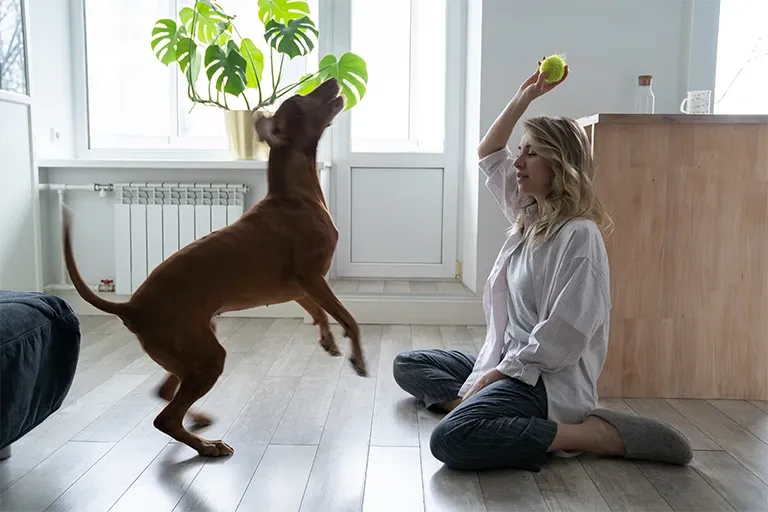
Switch to toy-based games like tug and fetch with clear rules: the game pauses the instant teeth touch skin. Start again when your dog is calm.
Biting the leash on walks
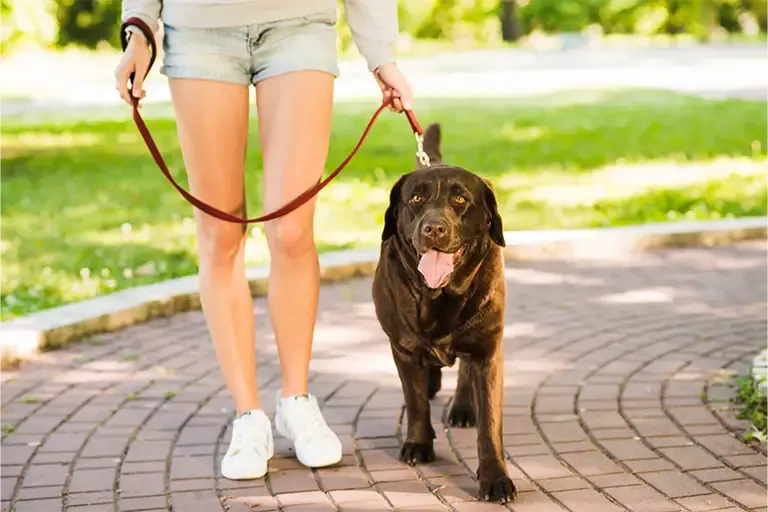
Leash biting is usually frustration or over-excitement. Carry a tug toy to offer instead, walk in quieter areas, and stop for a calm sniff break when arousal rises. A chain leash isn’t necessary; teaching a calmer walk is.
Biting when you touch their paws
Many dogs dislike paw handling, often after a bad nail trim. Go back to basics: touch the leg briefly, then give a treat. Gradually work down to the paw over days. See our guide to what to do if you cut your dog’s nail too short.
Biting around food, toys or furniture (resource guarding)
Never snatch items away. Instead, trade: offer something better and reward for letting go. Walk past while your dog eats and drop extra food into the bowl, so your approach predicts good things.
Biting when excited
Some dogs nip when greetings or play get too intense. Keep greetings low-key, pause play before it boils over, and teach a settle on a mat.
Biting other dogs
Dog-dog aggression needs careful management: keep distance from other dogs, avoid dog parks and on-leash greetings, and work with a professional on counter-conditioning.
Keeping children safe
- Never leave young children unsupervised with any dog, however gentle.
- Teach kids not to hug, kiss or lean over dogs, and to leave dogs alone when eating or sleeping.
- Give your dog a kid-free retreat space.
- Watch for stress signals (lip licking, turning away, freezing) and step in early.
What not to do
- Don’t punish growling or snapping. It removes the warning, not the feeling.
- Don’t use alpha rolls, scruffing or shock collars.
- Don’t force a frightened dog to “face their fears.”
- Don’t ignore a first bite. It’s the best time to act.
Related guides and tools
- Dog body language: warning signs before a bite
- Pet behavior analysis tool: find the cause
- How to stop a dog from chewing everything
- Dog training glossary: bite inhibition, threshold and more
- Leash training a puppy
Frequently asked questions
How do I stop my puppy from biting?
Puppy mouthing is normal and needs a different approach than biting in adult dogs: redirect to toys, short time-outs, and plenty of naps. See our step-by-step guide to stopping puppy biting.
Why did my dog suddenly start biting?
Sudden biting in a previously gentle adult dog is often caused by pain: dental disease, arthritis, ear infections or an injury. Hormonal changes, hearing or vision loss, and cognitive decline can also play a role. See your vet before starting training.
Should I punish my dog for growling?
No. Growling is a warning that gives you a chance to back off. If you punish growling, many dogs stop warning, and the next step can be a bite with no warning. Thank the warning, create distance, and work out what caused it.
What should I do if my dog bites someone?
Separate the dog calmly, make sure the person gets first aid, and seek medical care for any bite that breaks skin. Exchange details, check your dog’s rabies vaccination is current, and follow local reporting rules. Then book a vet check and a qualified behavior professional before it can happen again.
Can an aggressive dog be cured?
Many dogs improve dramatically with the right plan, but aggression is managed rather than cured. Expect lifelong management of triggers. A veterinary behaviorist or certified behavior consultant can assess risk and design a safe plan, sometimes including medication.
Note: This article is for general information and isn’t a substitute for advice from your veterinarian. Some links may be affiliate links; we may earn a commission at no extra cost to you.Written with AI assistance. Editorial review in progress. Last updated: . How we create our content