Separation Anxiety in Dogs: Signs, Causes and a Step-by-Step Training Plan
Dog separation anxiety explained: the signs, what causes it, and a step-by-step training plan to help your dog stay calm alone, plus when to ask your vet.
· 9 min read

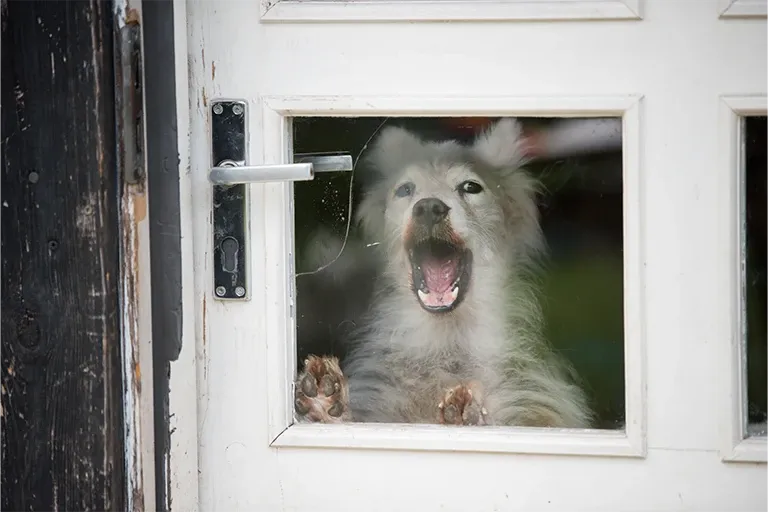
You come home to a chewed-up door frame, a puddle in the hallway, and a neighbor complaining that your dog howled for hours. For dogs with separation anxiety, being alone isn’t just boring; it’s genuinely frightening. The good news: it’s one of the most treatable behavior problems, as long as you approach it the right way.
This guide explains how to recognize separation anxiety, what causes it, and a step-by-step training plan that helps your dog learn to feel safe on their own.
Quick answer: how to help a dog with separation anxiety
- Confirm it’s separation anxiety. Film your dog when you leave. Distress that starts within minutes of you leaving points to anxiety, not boredom.
- Stop the panic for now. While training, avoid leaving your dog alone longer than they can cope. Use a sitter, daycare or friends.
- Desensitize departure cues. Pick up keys, put on shoes, then sit down again, until these signals stop triggering stress.
- Practice tiny absences. Start with absences so short your dog stays relaxed (sometimes 5–10 seconds) and build up very gradually.
- Keep comings and goings calm. No big goodbyes or excited greetings.
- Meet your dog’s needs first. A walk, sniffing and a food puzzle before alone-time practice.
- Talk to your vet. Rule out medical problems, and ask about medication for moderate to severe cases.
What is separation anxiety in dogs?
Separation anxiety is a panic response to being left alone or separated from a particular person. It’s not disobedience or spite. A dog chewing the door isn’t “getting back at you”; they’re trying to get to you. The behaviors are signs of real distress, similar to a panic attack.
Vets and behaviorists also talk about separation-related problems more broadly, since not every dog who struggles alone has classic anxiety. Some are frustrated, bored or scared of something else.
Signs of separation anxiety
The behaviors happen only or mainly when your dog is alone, and usually start soon after you leave:
| Sign | What it looks like |
|---|---|
| Vocalizing | Howling, barking or whining that starts soon after you leave and keeps going |
| Destruction at exits | Scratching or chewing doors, door frames, windows, crate bars |
| House soiling | Peeing or pooping indoors in a dog who’s otherwise house-trained |
| Escape attempts | Digging at doors, jumping through windows, breaking out of crates, sometimes with injuries |
| Pacing and restlessness | Walking in circles or back and forth, unable to settle |
| Drooling and panting | Wet patches near the door, heavy panting in a cool room |
| Not eating | Ignoring treats or food toys until you come home |
| Pre-departure stress | Shadowing you, trembling or hiding when you pick up keys or put on shoes |
| Over-the-top greetings | Frantic greetings that take a long time to calm down |
Film your dog. A phone, laptop or pet camera is the single most useful tool. It shows when the distress starts, what your dog does, and later, whether training is working.
Is it really separation anxiety?
Other problems look similar but need different solutions:
| Looks like | But could be | Clue |
|---|---|---|
| Chewing and destruction | Boredom or teething | Happens at random times, dog seems happy, not focused on exits |
| Accidents indoors | Incomplete house training or a urinary problem | Also happens when you’re home |
| Barking when alone | Alert barking at noises outside | Barking matches passers-by or sounds, with calm in between |
| Panic in the crate | Confinement anxiety | Dog is fine loose in the house, frantic only when shut in |
| Fear when alone | Noise phobia | Happens during storms, fireworks or construction (see fireworks anxiety) |
| New anxiety in an older dog | Pain or cognitive decline | Sudden change in a senior dog |
Not sure? Our free pet behavior analysis tool walks you through the likely cause in three questions.
What causes separation anxiety?
There’s rarely one single cause, but common triggers include:
- Changes in routine: a new job, the end of working from home, a new school year
- Moving house or a change of family members
- Loss of a person or another pet
- Rehoming: dogs adopted from shelters are more often affected
- Never learning to be alone: puppies who were always with someone
- A frightening event while alone, such as a storm, fireworks or a break-in
- Genetics and temperament: some dogs are simply more prone to anxiety
Step-by-step training plan
The goal is to teach your dog, in small and safe steps, that being alone is predictable and nothing bad happens. Go at your dog’s pace: progress is measured in calm repetitions, not minutes.
Step 1: Manage absences while you train
This is the hardest but most important step. If your dog panics every day while you work, those absences undo your training. For the next few weeks, cover absences longer than your dog can handle:
- A dog-sitter, friend or neighbor who stays with your dog
- Doggy daycare a few days a week, if your dog enjoys it
- Taking your dog to work or in the car (not in hot weather)
- Rearranging your schedule or working from home where possible
Step 2: Take the drama out of departure cues
Many dogs start panicking long before you leave, because keys, shoes, coats and bags predict loneliness. Break that link:
- Several times a day, pick up your keys, then sit down and carry on.
- Put on your shoes and coat, then watch TV.
- Grab your bag, walk to the door, and make a cup of coffee instead.
Keep going until your dog barely looks up when you do these things.
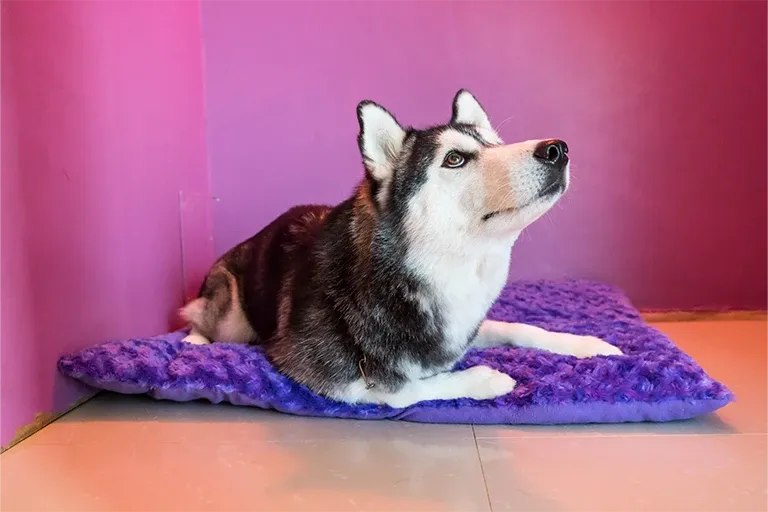
Step 3: Build a relaxed “place”
Teach your dog to relax on a bed or mat away from you:
- Reward calm behavior on the mat with treats, then gradually step further away.
- Practice while you’re in another room for a few seconds.
- Give a long-lasting chew there so it becomes a pleasant spot.
This is “independence training”: your dog learns that not being glued to you is fine.
Step 4: Practice graduated absences
This is the heart of the plan:
- Find the starting point. Step out of the door and close it. Watch your dog on camera. How long until the first sign of stress (whining, pacing, scratching)? Start well below that, even if it’s just 5–10 seconds.
- Repeat short absences of that length, calmly, several times in a session. Come back before your dog becomes anxious.
- Increase slowly. When your dog is relaxed for several repetitions, add a little time: 10% to 20% more, not double.
- Mix it up. Sprinkle in some shorter absences so it’s not always getting harder: 30 seconds, 1 minute, 20 seconds, 2 minutes, 45 seconds…
- Watch for signs of stress and go back a step whenever you see them.
- Practice daily, ideally in short sessions of 10–20 minutes, with breaks.
Typical progress is slow at first and then speeds up. Many dogs need several weeks to get past the first 10–30 minutes, then build faster.
Step 5: Keep hellos and goodbyes boring
- Leave without fuss: a calm “see you later” is enough.
- When you return, wait until your dog settles before greeting them. Then say hello calmly.
- Avoid long, emotional goodbyes. They signal that something big is happening.
Step 6: Set your dog up for calm
Before alone-time practice:
- Exercise: a walk with plenty of sniffing. Sniffing is calming and tiring.
- Toilet break.
- Food puzzle or lick mat as you leave. Note: dogs with severe anxiety often won’t eat when alone. If the food toy is untouched when you return, that tells you the absence was too long.
- Background sound: some studies in shelter dogs found calm classical music and audiobooks reduced signs of stress. It’s worth trying alongside training.
What doesn’t help (and can make it worse)
- Punishment. Scolding or punishing after the fact adds fear and makes anxiety worse. Your dog can’t connect it to what happened hours earlier.
- “Letting them cry it out.” Long, panicked absences reinforce the fear rather than teaching calm.
- Bark collars and shock collars. They suppress symptoms through pain without treating the cause.
- Crating a dog who panics in a crate. It can lead to broken teeth and nails. Test calmly first.
- Getting another dog as a quick fix. Rarely works if your dog is attached to you specifically.
Calming aids: what actually works?
| Aid | Evidence | Verdict |
|---|---|---|
| Training plan (above) | Strongest | The core of every successful plan |
| Prescription medication | Good, especially combined with training | Ask your vet for moderate to severe cases |
| Exercise and enrichment | Helps reduce overall stress | Always worth doing |
| Calm music or audiobooks | Some evidence in shelter dogs | Low-cost, worth trying |
| Pheromone diffusers (e.g., Adaptil) | Mixed results | May help some dogs a little |
| Anxiety vests (e.g., ThunderShirt) | Limited | May help some dogs; not a solution on its own |
| Supplements and calming chews | Weak or mixed | Ask your vet; don’t rely on them alone |
When to see a vet or behaviorist
Talk to your vet if:
- Your dog injures themselves trying to escape
- The anxiety is severe (non-stop howling, destruction, not eating)
- There’s no progress after 2–4 weeks of consistent training
- The anxiety appeared suddenly, especially in an older dog
- Your dog also has other fears, like noises or strangers
Your vet can rule out pain or illness and discuss medication. In the US, fluoxetine (Reconcile) and clomipramine (Clomicalm) are FDA-approved for separation anxiety in dogs, and are used alongside training. For complex cases, ask for a referral to a veterinary behaviorist (DACVB) or a certified separation anxiety trainer.
Puppies and separation anxiety
Prevention is much easier than cure. From the first days at home:
- Practice short, positive alone times daily, even when you’re home all day.
- Use crate training or a puppy pen with chews, and build duration slowly.
- Don’t make every moment together. Puppies need some quiet time on their own.
- If your puppy cries at night, see how to help a whining puppy.
A sample first week
| Day | Practice |
|---|---|
| 1–2 | Film a short absence to find your starting point. Departure-cue practice 5× a day. Mat training. |
| 3–4 | 10–15 short absences per session, below the stress point. Calm returns. |
| 5–6 | Slowly increase, mixing in easy short absences. Add a food toy as you leave. |
| 7 | Review the videos: is your dog calmer earlier on? Adjust your pace. |
Keep a simple log of absence length and your dog’s reaction. Our behavior tool’s progress tracker can help you see improvement over time.
Related guides and tools
- How to stop a dog from whining
- How to stop excessive barking (including when you leave)
- How to stop a dog from chewing everything
- Sound desensitization for noise-sensitive dogs
Frequently asked questions
How do I know if my dog has separation anxiety?
The key sign is timing: the problem behavior happens only (or mostly) when your dog is alone or separated from you, usually starting within the first 30 minutes. Typical signs are howling or barking, scratching or chewing at doors and windows, peeing or pooping indoors, pacing, drooling, and refusing food until you return. Record your dog with a camera to be sure.
Can separation anxiety in dogs be cured?
Many dogs improve dramatically, and some recover completely, but it takes gradual training over weeks to months. Mild cases often improve within a few weeks; severe cases usually need a training plan plus medication from a vet. The earlier you start, the better.
Should I get a second dog to help with separation anxiety?
Usually not. Most dogs with separation anxiety are attached to a specific person, not just any company, so another dog rarely solves it, and you may end up with two stressed dogs. Some dogs do cope better with company, so if you’re considering it, try a dog-sitter or friend’s dog first to see whether it helps.
Is it OK to crate a dog with separation anxiety?
Only if your dog is genuinely relaxed in the crate. Some anxious dogs feel safer in a den; others panic in confinement and can injure themselves trying to escape. Film your dog in the crate while you’re home but out of sight. If you see frantic scratching, biting the bars or heavy panting, use a dog-proofed room or a baby gate instead.
What medication is used for separation anxiety in dogs?
In the US, two medications are FDA-approved for canine separation anxiety: fluoxetine (Reconcile) and clomipramine (Clomicalm). Vets may also prescribe short-acting medication for specific absences. Medication works best alongside a training plan, so talk to your vet; never give human medication without veterinary advice.
How long can a dog with separation anxiety be left alone?
Only as long as they can stay calm, which may be just seconds at first. During training, avoid leaving your dog alone longer than their current comfort level. Use a dog-sitter, daycare, a friend, or take your dog with you. Every panicked absence can undo progress.
Note: This article is for general information and isn’t a substitute for advice from your veterinarian. Some links may be affiliate links; we may earn a commission at no extra cost to you.Written with AI assistance. Editorial review in progress. Last updated: . How we create our content