Dog Food Calculator
Find out how much to feed your dog each day. Enter weight, life stage and activity, plus the calories from your food label, and you’ll get daily calories and the exact amount in cups, grams or cans, split into meals.
Last updated October 2026
Typical values: dry food 300–450 kcal/cup (3,200–4,200 kcal/kg); wet food 250–450 kcal per 13 oz can.
2.79 cups a day
Split into 2 meals: about 1.39 cups each.
Range to start with: 953–1,165 kcal.
- Treat allowance (10%)
- 106 kcal
- Reduce meals if you train with lots of treats
- Resting energy (RER)
- 662 kcal
- 70 × 20.0 kg0.75
- Life-stage factor
- × 1.6
- Based on age, neuter status and activity
This is a starting point. Every dog is different. Check your dog’s body condition every 2–4 weeks (you should feel the ribs easily and see a waist) and adjust portions by about 10%.
How the dog food calculator works
Veterinarians estimate calorie needs in two steps. First, the resting energy requirement (RER): the energy needed for basic body functions, calculated as 70 × body weight in kg0.75. Then RER is multiplied by a life-stage factor that reflects age, neuter status and activity:
| Dog | Factor × RER |
|---|---|
| Puppy under 4 months | 3.0 |
| Puppy 4 months to adult | 2.0 |
| Neutered adult | 1.6 |
| Intact adult | 1.8 |
| Inactive or weight-gain prone adult | 1.2–1.4 |
| Senior | 1.4–1.6 |
| Active / working dog | 2.0–3.0+ |
| Weight loss (fed for target weight) | 1.0 |
These are starting points. Individual dogs can need 20–30% more or less, which is why checking body condition matters.
How to find your food’s calories
Look for the calorie content statement on the bag or can, usually near the guaranteed analysis. It’s written like “3,650 kcal/kg, 380 kcal/cup.” Choose the matching unit in the calculator. Measure with a proper measuring cup or, better, a kitchen scale. A “cup” scooped from the bag can be 20% bigger than you think.
Check and adjust every few weeks
- Ribs: easy to feel, with a thin covering of fat.
- Waist: visible behind the ribs when looking from above.
- Tummy tuck: the belly rises toward the hind legs when seen from the side.
If your dog is gaining unwanted weight, reduce the daily amount by about 10% and check again in 2–4 weeks. Keeping dogs lean really matters: in a long-term study of Labradors, lean dogs lived around two years longer than their overweight littermates.
Feeding tips
- Feed at set times instead of leaving food out all day. It also helps with house training.
- Use a slow feeder or puzzle toy for fast eaters. See our dog bowl guide.
- Change foods gradually over 7–10 days to avoid an upset stomach.
- Fresh water should always be available.
- Curious about human foods? See pineapple, peaches and lettuce, and keep chocolate away. Here’s our chocolate toxicity calculator.
Dogs with medical conditions (kidney disease, diabetes, allergies, pancreatitis) need a diet plan from their vet.
Frequently asked questions
How much should I feed my dog per day?
It depends on weight, age, activity and the calories in your food. As an example, a 20 kg (44 lb) neutered adult with normal activity needs roughly 1,000 kcal a day. With a dry food of 380 kcal per cup, that’s about 2½–3 cups a day. Use the calculator above for your dog, then adjust based on body condition.
Are the feeding guidelines on the bag accurate?
They’re a reasonable starting range, but they’re often generous and don’t account for neutering, age or activity. Many dogs gain weight on the bag amount. Calculating from your dog’s needs and checking body condition is more accurate.
How many times a day should I feed my dog?
Puppies under 4 months: 3–4 meals. Puppies 4–12 months: 3 meals. Adults: 2 meals. Deep-chested breeds prone to bloat (like Great Danes and German Shepherds) do better with two or more smaller meals rather than one large one.
How do I know if my dog is overweight?
You should be able to feel the ribs easily under a thin layer of fat (like the back of your hand), see a waist from above, and see the belly tuck up from the side. If you can’t feel the ribs or there’s no waist, your dog is likely overweight.
Do treats count?
Yes. Treats and chews should be no more than about 10% of daily calories. If you use lots of treats for training, use part of your dog’s daily food as rewards or reduce meals slightly.
How much should I feed a puppy?
Puppies need about three times their resting energy under 4 months and about twice from 4 months until adulthood, split into 3–4 meals. Large-breed puppies should eat a large-breed puppy food and grow slowly and steadily; overfeeding increases the risk of joint problems.
Related guides
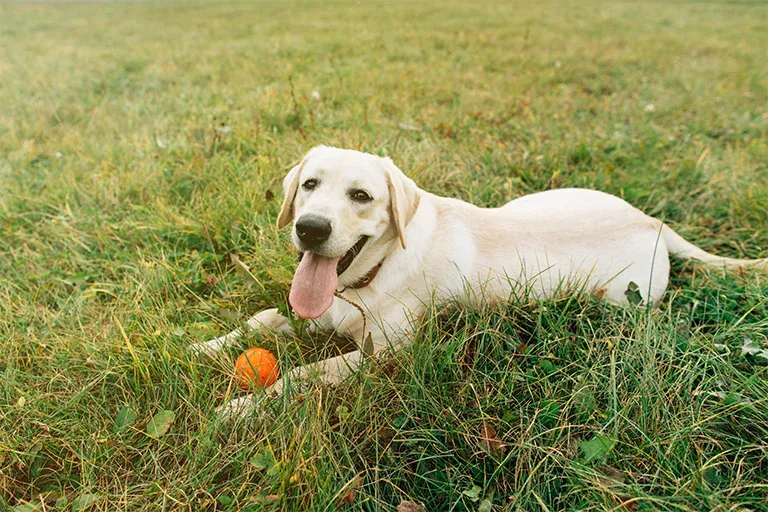
Labrador Retriever Breed Guide: Temperament, Exercise, Health & Care
Labrador Retriever guide: temperament, size, English vs American Labs, exercise, training, shedding, health problems like obesity, and the real costs.
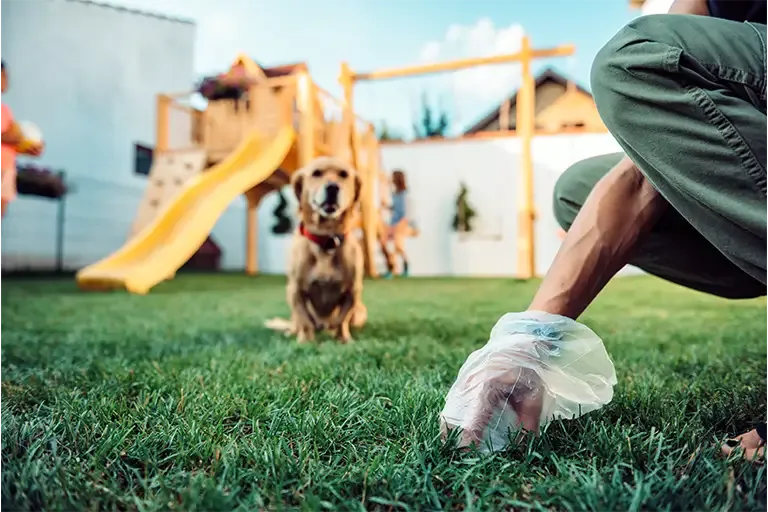
How to Potty Train a Dog: A Complete Step-by-Step Guide
How to potty train a puppy or adult dog: a step-by-step plan, a daily schedule, how long it takes, night-time tips, and how to handle accidents calmly.
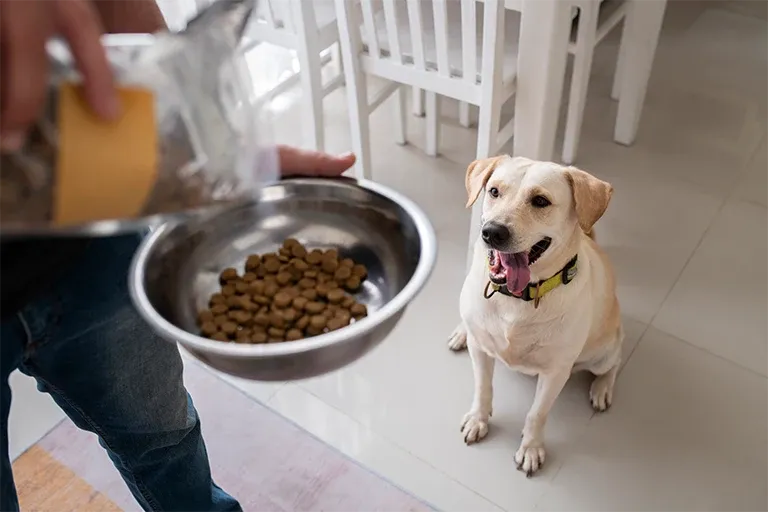
How to Choose the Best Dog Bowl: Materials, Size & Special Bowls
How to choose the best dog bowl: stainless steel vs ceramic vs plastic, the right size, slow feeders, elevated bowls and bloat, and how often to wash them.
More free dog tools
Sound Desensitization Player
Help your dog get used to fireworks, thunder and the doorbell.
Online Dog Clicker
A free training clicker with counter and session timer.
Dog Age Calculator by Breed
Convert your dog’s age to human years, adjusted for size.
Puppy Weight Calculator
How big will your puppy get? Estimate adult weight.
Dog Chocolate Toxicity Calculator
Did your dog eat chocolate? Check the risk in seconds.
Dog Name Generator
Find the perfect name by style, gender and personality.
Pet Behavior Analysis Tool
Answer a few questions to understand what drives a behavior.
Dog Whistle Frequency Simulator
Play adjustable high-frequency whistle tones in your browser.
Glossary for Dog Training
Plain-English definitions of common training terms.