Leash Training a Puppy: Step-by-Step Guide to Loose-Leash Walking
How to leash train a puppy: get them used to the harness, teach loose-leash walking step by step, and fix pulling, leash biting, lunging and refusing to walk.
· Updated · 4 min read
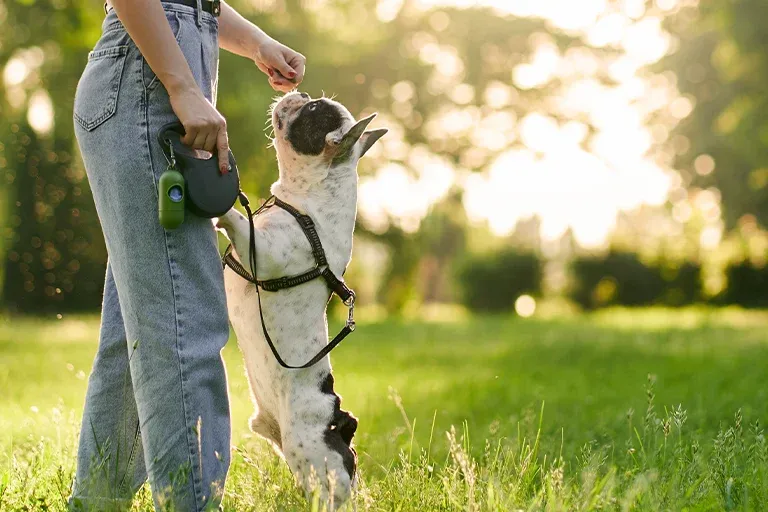
A puppy who walks nicely on a leash makes every outing more enjoyable for you both. The good news is that leash manners are completely learnable. Puppies don’t pull because they’re stubborn; they pull because they want to get somewhere, and pulling works.
This step-by-step guide shows you how to teach loose-leash walking, where the leash hangs in a relaxed J-shape and your puppy chooses to stay near you.
What you need
- A Y-shaped harness that doesn’t restrict the shoulders. A front-clip harness helps with pullers.
- A flat collar with an ID tag.
- A 4–6 ft flat leash, not retractable.
- Lots of small, soft treats: you’ll use dozens per walk at first.
- A treat pouch so rewards are quick to reach.
Step 1: Get your puppy used to the harness and leash
- Show the harness, give a treat. Repeat a few times.
- Slip it on, give treats, take it off. Gradually increase wearing time.
- Clip on a light leash and let your puppy drag it around indoors under supervision, with play and treats.
- Pick up the leash and follow your puppy around, keeping it loose.
Keep this stage short and happy. Most puppies are comfortable within a few days.
Step 2: Teach “this is the place to be”
Before walking anywhere, teach your puppy that the spot next to your leg pays well.
- Stand still indoors. Every time your puppy comes near your side, say “yes!” and drop a treat by your foot.
- Take a step or two. When your puppy follows, reward at your side.
- Gradually add more steps between rewards.
Pick one side (left is traditional) and always deliver treats there. That makes it easy for your puppy to know where to be.
Step 3: Practice indoors, then in the yard
Start where there are few distractions. Walk a few steps, reward your puppy for staying close, turn around, reward again. Keep sessions 3–5 minutes. Puppies have short attention spans.
Once your puppy is doing well indoors, move to the garden, then the sidewalk outside your home, then quiet streets, then busier places.
Step 4: Teach that pulling doesn’t work
When the leash goes tight:
- Stop and stand still (“be a tree”). Don’t pull back.
- The moment the leash slackens, even slightly, say “yes!” and move forward again or reward.
- Or turn around and walk the other way, rewarding your puppy when they catch up.
This teaches the core lesson: a tight leash stops the walk; a loose leash makes it continue. Be consistent. If you sometimes let pulling work, your puppy will keep trying.
Step 5: Make walks worth it
- Let your puppy sniff. Sniffing is mental exercise and a great reward: “go sniff” can be a release cue.
- Reward checking in. Every time your puppy looks up at you, reward.
- Use life rewards: greeting a friend or exploring a bush can be the reward for walking nicely to it.
Common leash training problems
Pulling
Go back to quieter places, use more and better rewards, and practice the “be a tree” method. A front-clip harness helps manage strong pullers while you train. Avoid choke, prong and shock collars; they risk injury and fear.
Biting or tugging the leash
Common in excited puppies. Carry a tug toy and offer it as a better option, stop moving until your puppy lets go, and reward calm walking. A short sniff break often helps reset an over-excited puppy. Our guide to stopping puppy biting has more tips.
Refusing to walk or sitting down
- Check for fear: traffic, noises or new surfaces can be overwhelming.
- Lure forward a few steps with a treat, then reward heavily.
- Keep walks short, since puppies tire quickly.
- Never drag a puppy; it makes the leash scary.
Lunging at dogs, people or bikes
Increase distance, reward your puppy for looking at the trigger calmly, then turn away. Practice in quieter areas and gradually build up. If it persists, try our behavior analysis tool or contact a positive-reinforcement trainer.
Zig-zagging
Reward frequently at your side, walk with purpose, and give designated sniff breaks so your puppy doesn’t need to weave constantly.
How much should a puppy walk?
Puppies need short, frequent outings rather than long hikes. Focus on exploration and socialization, not distance. Let your puppy set a gentle pace, give plenty of breaks, and increase gradually as they grow. Large and giant breeds especially should avoid long, repetitive exercise while their joints develop.
Tips for enjoyable walks
- Walk at a brisk, consistent pace. Puppies find slow, meandering humans hard to stay with.
- Bring water on warm days and avoid hot pavement (if it’s too hot for your hand, it’s too hot for paws).
- Use a distinctive recall cue, like a whistle signal from our online dog whistle, to practice on a long line.
- Keep training fun. End on a success.
Related guides and tools
- Crate training a puppy
- Potty training guide
- How to stop a dog from jumping on people
- Dog training glossary: loose-leash walking, heel and more
Frequently asked questions
At what age should I start leash training my puppy?
Start as soon as your puppy comes home, usually at 8–10 weeks. Begin indoors with a collar or harness and a light leash, then move to the garden. Many vets advise waiting until vaccinations are complete before walking in public areas, but you can carry your puppy out to socialize safely before then.
How long does it take to leash train a puppy?
Most puppies get comfortable wearing a leash within a few days. Reliable loose-leash walking takes longer, often several weeks to a few months of consistent practice, and needs refreshing during adolescence.
Is a harness or collar better for leash training?
For most puppies, a well-fitted Y-shaped harness is the safer, more comfortable choice, especially for small breeds and flat-faced dogs prone to tracheal or airway problems. A front-clip harness can reduce pulling while you train. Keep a flat collar on for ID tags.
What length leash is best?
A 4–6 ft (1.2–2 m) flat leash is ideal for everyday training. Avoid retractable leashes during training: they teach dogs that pulling extends their freedom. A 15–30 ft long line is great for practicing recall in open spaces.
Why does my puppy refuse to walk on a leash?
Usually because the leash feels strange, something nearby is scary, or they’re tired. Let them drag a light leash indoors, lure a few steps forward with treats, keep sessions short, and never drag a frightened puppy.
Note: This article is for general information and isn’t a substitute for advice from your veterinarian. Some links may be affiliate links; we may earn a commission at no extra cost to you.Written with AI assistance. Editorial review in progress. Last updated: . How we create our content