Labrador Retriever Breed Guide: Temperament, Exercise, Health & Care
Labrador Retriever guide: temperament, size, English vs American Labs, exercise, training, shedding, health problems like obesity, and the real costs.
· Updated · 6 min read
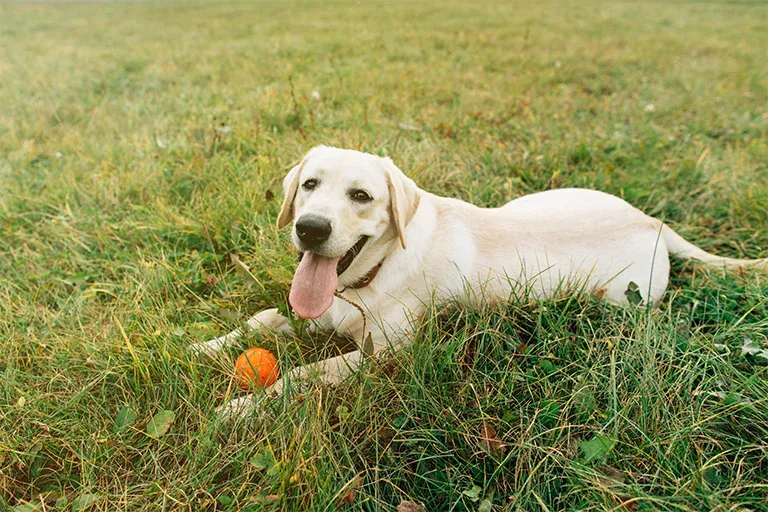
The Labrador Retriever has been one of the most popular dog breeds in the world for decades, and it’s easy to see why. Labs are friendly, outgoing, gentle and endlessly enthusiastic. They make wonderful family pets, and they’re also the breed of choice for guide dogs, assistance dogs, detection dogs and search-and-rescue teams.
They’re also big, strong, food-obsessed and very energetic, especially as young dogs.
Labrador Retriever quick facts
| Breed group | Sporting (AKC); Gundog (UK) |
| Origin | Newfoundland (Canada), developed in Britain |
| Height | Males 22.5–24.5 in (57–62 cm); females 21.5–23.5 in (55–60 cm) |
| Weight | Males 65–80 lb (29–36 kg); females 55–70 lb (25–32 kg) |
| Life expectancy | 10–12 years |
| Coat | Short, dense, water-resistant double coat |
| Colors | Black, yellow (cream to fox red), chocolate |
| Shedding | High |
| Energy | High |
| Trainability | Excellent |
| Good with kids | Excellent |
History
Labradors descend from the St. John’s water dog of Newfoundland, which helped fishermen haul nets and retrieve fish. In the early 1800s, British aristocrats, including the Earls of Malmesbury and the Dukes of Buccleuch, imported these dogs and refined them into the retriever we know today. The Kennel Club recognized the breed in 1903, and the AKC in 1917.
Temperament and personality
- Friendly with everyone, people and dogs alike.
- Gentle and patient with children.
- Eager to please and very trainable.
- Energetic and playful, with a long adolescence.
- Food-motivated, sometimes extremely so.
- Mouthy: they love carrying things.
- Water lovers: few Labs can resist a puddle, lake or sea.
English vs American Labradors
| English (show line) | American (field line) | |
|---|---|---|
| Build | Stockier, shorter legs, broad chest | Leaner, taller, athletic |
| Head | Broad, blocky | Narrower, longer muzzle |
| Tail | Thick “otter” tail | Thinner tail |
| Energy | Moderate–high | Very high |
| Best for | Families | Active owners, field work, sports |
Is a Labrador right for you?
A great fit if you:
- Have an active family and time for daily exercise and training
- Want a sociable, friendly dog, including with visitors
- Have space (a yard is a bonus)
- Don’t mind hair and a bit of mud
Probably not ideal if you:
- Want a guard dog
- Are away from home all day
- Want a calm dog from day one (most Labs calm down around 2–3 years)
- Can’t keep food out of reach
Exercise needs
Adult Labs need at least 1–2 hours of exercise a day:
- Walks with plenty of sniffing
- Fetch and retrieving games (their favorite)
- Swimming: excellent, low-impact exercise
- Scent work, dock diving, agility, field trials
- Food puzzles and training games for mental exercise
Go easy on puppies’ joints: let them play freely rather than going on long runs until they’re fully grown.
Training a Labrador
- Start early: socialization, house training and crate training.
- Teach loose-leash walking before your puppy gets big. See our leash training guide.
- Teach calm greetings. Labs love people and tend to jump. Here’s how to stop jumping.
- Manage chewing with plenty of appropriate chews. See how to stop destructive chewing.
- Use food wisely: subtract training treats from daily meals.
- Teach “leave it” and “drop it”: Labs will pick up anything.
Training a Labrador puppy
Lab puppies are clever, food-loving and very mouthy, which makes them easy to train once you work with those traits:
- Use their food. Hand out part of each meal as training rewards. Labs work happily for kibble, so you won’t need many extra treats.
- Keep sessions short: 3–5 minutes, a few times a day. Stop while your puppy still wants more.
- Expect lots of mouthing. Labs are retrievers, bred to carry things. Keep a tug toy handy and redirect every bite; see how to stop puppy biting.
- Start house training on day one with a regular schedule. Our potty training guide has a daily plan.
- Socialize early: calm, positive meetings with people, dogs, sounds and places, especially before about 16 weeks.
- Teach a settle. Reward your puppy for lying calmly on a mat. Young Labs have lots of energy and need to learn how to switch off.
- Turn retrieving into training: short fetch games teach “bring it back” and “drop it” and burn energy without long runs.
- Track growth with our puppy weight calculator. Labs gain weight easily, and lean puppies have healthier joints.
Grooming and shedding
- Brush weekly with a rubber curry brush or deshedding tool, and daily during spring and fall sheds.
- Bathe every 1–3 months, or after muddy adventures.
- Dry ears after swimming to help prevent ear infections.
- Trim nails every 2–4 weeks and brush teeth regularly.
Tips: dog shedding remedies.
Labrador colors
The breed standard recognizes three colors. Everything else is a shade or a dilute of these:
| Color | Notes |
|---|---|
| Black | The most common color, dominant in genetics |
| Yellow | From pale cream to deep fox red; all are “yellow” Labs |
| Chocolate | Brown; in a UK study chocolate Labs had a shorter average lifespan and more ear and skin disease than black and yellow Labs |
| Silver, charcoal, champagne | Dilute shades of chocolate, black and yellow. Not recognized as separate colors by kennel clubs; dilute coats can come with skin and coat problems |
Color doesn’t change temperament: field vs show breeding has a much bigger effect.
Labrador vs Golden Retriever
| Labrador Retriever | Golden Retriever | |
|---|---|---|
| Coat | Short, dense double coat | Longer, feathered double coat |
| Shedding and grooming | Heavy seasonal shedding; quick weekly brush | Heavy shedding; brushing several times a week |
| Size | 55–80 lb (25–36 kg) | 55–75 lb (25–34 kg) |
| Energy | High, especially field lines | High, slightly softer |
| Temperament | Outgoing, food-driven, very sociable | Gentle, sensitive, people-focused |
| Life expectancy | 10–12 years | 10–12 years |
| Health watch-outs | Obesity, joints | Cancer, joints, skin |
Both are excellent family dogs. Choose a Lab if you want less grooming; choose a Golden if you love the coat and a slightly softer temperament.
Health problems in Labradors
- Obesity: the most common problem in Labs, affecting joints, lifespan and quality of life. A landmark Purina lifetime study found that Labradors kept lean lived about two years longer on average.
- Hip and elbow dysplasia: ask for screening results for both parents.
- Cruciate ligament injuries, especially in overweight dogs.
- Progressive retinal atrophy (PRA) and other eye diseases (DNA tests available).
- Exercise-induced collapse (EIC): a genetic condition in some field lines (DNA test available).
- Ear infections and skin allergies.
- Cancer, including lymphoma and mast cell tumors.
Feeding
Feed a quality large-breed puppy food until about 12 months, then an adult food in measured amounts, typically 2.5–3.5 cups of dry food a day for an active adult, split into two meals. Use a slow feeder bowl if your Lab inhales food. Find one in our dog bowl guide.
Cost of owning a Labrador
- Puppy from a health-testing breeder: $1,200–$3,000
- Adoption: $150–$500
- Food: $50–$80 a month
- Routine vet care: $500–$1,000 a year
- Pet insurance: recommended for joint and ligament issues
Related guides and tools
- Golden Retriever breed guide
- Dog age calculator: Labrador years
- Dog name generator
- Potty training guide
Frequently asked questions
Are Labradors good family dogs?
Labradors are among the best family dogs: friendly, patient, playful and eager to please. They’re great with children and other pets but need lots of exercise, training and company, especially in their boisterous first 2–3 years.
What is the difference between English and American Labs?
English (show-bred) Labs are typically stockier, with broader heads, thicker otter tails and a calmer temperament. American (field-bred) Labs are leaner, taller and higher-energy. Both are the same breed.
Do Labradors shed?
Yes. Labs have a short but dense double coat that sheds year-round and heavily twice a year. Weekly brushing (more during sheds) keeps it manageable.
How long do Labradors live?
Usually 10–12 years. Research has found that Labradors kept lean throughout life lived around two years longer than their overweight littermates, so weight control matters.
Why are Labradors always hungry?
Many Labradors carry a mutation in the POMC gene, linked to greater food motivation and a higher risk of obesity. It’s especially common in Labs bred as assistance dogs. Measure meals and use part of the ration for training.
Are chocolate Labs different from black or yellow Labs?
Color is only coat deep, but a UK study found chocolate Labradors had a shorter median lifespan and higher rates of ear and skin disease than black or yellow Labs, possibly because of the smaller gene pool used to produce the color.
Note: This article is for general information and isn’t a substitute for advice from your veterinarian. Some links may be affiliate links; we may earn a commission at no extra cost to you.Written with AI assistance. Editorial review in progress. Last updated: . How we create our content