How to Stop Puppy Biting: A Calm, Step-by-Step Plan (and When It Ends)
How to stop puppy biting and nipping: why puppies bite, a step-by-step plan for hands, feet and clothes, the over-tired witching hour, and when biting stops.
· 5 min read

Those tiny needle teeth hurt. If your puppy is turning your hands, ankles and sleeves into chew toys, you’re in very good company: puppy biting is one of the most common problems new owners face.
The good news: it’s normal, it’s temporary, and with a calm, consistent plan most puppies learn gentle manners within a few weeks. Here’s how.
Quick answer: how to stop a puppy biting
- Redirect every bite to a toy, especially a long tug toy that keeps fingers away from teeth.
- Stop the fun if teeth keep touching skin: freeze, then calmly step away for 20–30 seconds.
- Prevent over-tiredness. Puppies need 16–18 hours of sleep a day; enforce naps.
- Soothe teething with frozen chews and rubber toys.
- Reward calm behavior, such as sitting or lying down, with attention and treats.
- Avoid rough hand games and chasing games that invite biting.
- Be consistent. Everyone in the home needs to respond the same way.
- Don’t punish. Scolding, tapping the nose or holding the mouth shut makes biting worse.
Why do puppies bite?
- Exploring: puppies use their mouths the way babies use their hands.
- Play: with littermates, play is all chasing, wrestling and mouthing.
- Teething: from about 3 to 6 months, adult teeth push through and gums are sore.
- Over-tiredness and over-excitement: biting goes up sharply when puppies need sleep.
- Attention: if biting gets a big reaction, it becomes a great game.
Puppy biting also has a purpose: it’s how puppies learn bite inhibition, control over how hard they bite. Littermates yelp and stop playing when bites hurt. Your job is to continue that lesson with humans.
Step-by-step plan
1. Always have a toy within reach
Keep toys in every room and in your pocket. Long tug toys and rope toys are ideal: they give your puppy something to bite that’s far from your fingers. When your puppy starts mouthing you, offer the toy and make it exciting by wiggling it along the floor.
2. Redirect, then reward
The moment teeth touch skin:
- Freeze and go still. Moving hands look like prey.
- Offer the toy and praise when your puppy bites it instead.
- Keep playing with the toy so the right choice pays off.
3. Use calm time-outs when needed
If your puppy ignores the toy and keeps biting:
- Calmly say a marker like “oops”.
- Stand up, turn away, or step behind a baby gate for 20–30 seconds.
- Come back calmly and try again with a toy.
Time-outs work because biting makes the fun stop. Keep them short and boring, without scolding.
4. Enforce naps
This is the step most owners miss. Young puppies need 16–18 hours of sleep a day. Over-tired puppies bite more, get the zoomies and grab clothes. A simple routine:
- Awake about 1 hour (less for very young puppies), then
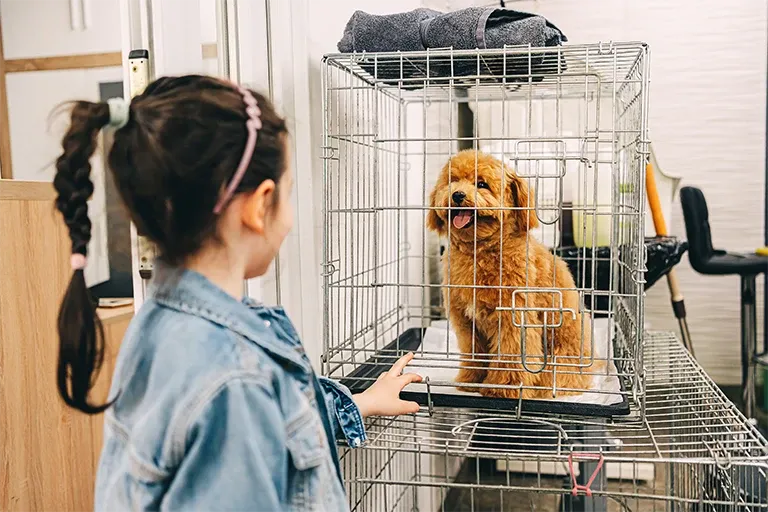
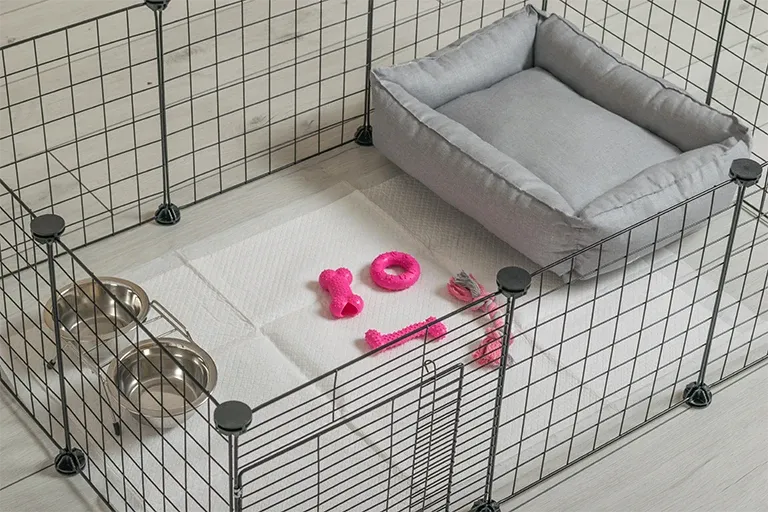
- Nap 1–2 hours in a crate, pen or quiet room with a chew.
If your puppy suddenly turns into a land shark, think “nap time” before “more play”. See our crate training guide for making naps easy.
5. Soothe teething pain
- Frozen carrots or a damp washcloth twisted and frozen
- Rubber teething toys, some of which can be filled with food and frozen
- Rotating chews so they stay interesting
More ideas: how to stop a dog from chewing everything.
6. Reward calm, gentle behavior
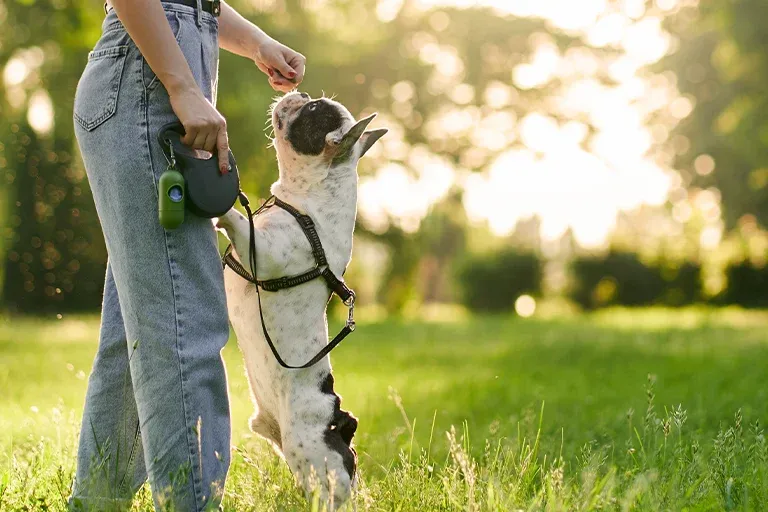
Catch your puppy being calm and reward it: lying quietly, sitting, licking instead of biting. Teach a hand target (“touch”): your puppy bumps your palm with their nose for a treat, which gives them something to do with their mouth that isn’t biting. Learn it in our training glossary.
7. Handle gently, every day
Touch paws, ears, mouth and collar briefly, then give a treat. Puppies that learn to enjoy handling are much less likely to bite at the vet, the groomer or nail trims.
Common puppy biting situations
| Situation | What helps |
|---|---|
| Biting hands during petting | Pet slowly and briefly; keep a chew in your other hand for your puppy to hold |
| Biting ankles and feet when you walk | Stop walking and stand still; toss a toy behind you; drag a tug toy along the floor to redirect the chase |
| Grabbing clothes and shoelaces | Freeze (tugging back is fun); keep a tug toy handy; wear older clothes during the puppy months |
| Evening “witching hour” biting | Calm wind-down, chew in the pen, then a nap; avoid more excitement |
| Biting the leash | Carry a toy for your puppy to hold; walk in quieter places. See leash training |
| Biting children | Supervise, use gates, teach kids to “be a tree” (stand still, arms folded); give kids a long toy |
| Biting when picked up | Pick up less, support the body well, pair handling with treats |
What not to do
- Don’t tap the nose, hold the mouth shut or scruff. It frightens puppies and can lead to real biting later.
- Don’t yell or chase. It turns biting into an exciting game.
- Don’t play wrestling or hand games while your puppy is learning.
- Don’t stop all mouthing too early. Puppies need to learn bite inhibition, gently and gradually.
- Don’t rely on bitter sprays on your hands. They don’t teach anything.
When does puppy biting stop?
| Age | What to expect |
|---|---|
| 8–12 weeks | Lots of mouthing and play biting; teaching starts now |
| 3–6 months | Teething peak; biting often gets worse before it gets better |
| 6–7 months | Adult teeth are in; mouthing fades with consistent training |
| 7+ months | Occasional mouthy moments when excited, especially in herding and sporting breeds |
Breeds known for being extra mouthy include Labradors, Golden Retrievers, German Shepherds, Border Collies and other herding dogs. They need the same approach, with a bit more patience. See our German Shepherd guide for “land shark” tips.
When to get help
Talk to your vet and a qualified positive-reinforcement trainer if your puppy:
- Bites hard enough to break skin regularly after 4–5 months
- Growls, freezes or bites when you go near food, toys or resting places
- Bites when touched in certain places (possible pain)
- Seems fearful, stiff or panicky rather than playful when biting
These are rare in young puppies, but early help makes a big difference. For adult dogs who bite, see how to stop a dog from biting.
Related guides and tools
- Crate training a puppy
- Puppy weight calculator: how big will my puppy get?
- Online dog clicker for training
- Pet behavior analysis tool
Frequently asked questions
At what age do puppies stop biting?
Most puppies bite and mouth the most between about 3 and 6 months, while teething. With consistent training, mouthing usually fades by 6–7 months, once the adult teeth are in. Some breeds, especially herding and sporting breeds, stay mouthy for longer and need extra practice.
Is it normal for my puppy to bite so much?
Yes. Puppies explore the world with their mouths, play-fight with littermates, and teethe. Frequent biting is normal; it isn’t a sign your puppy will become aggressive. What matters is teaching them, gently and consistently, that human skin isn’t a toy.
Should I yelp when my puppy bites?
It works for some puppies but excites others, who then bite harder. If a high-pitched “ouch” makes your puppy back off, it’s fine to use. If it winds them up, skip it: calmly stop the game, redirect to a toy, or step away for 20–30 seconds instead.
Why does my puppy bite more in the evening?
Many puppies have a “witching hour” in the evening when they’re over-tired and over-stimulated, much like a toddler who skipped a nap. Biting, zoomies and grabbing clothes are classic signs. A calm wind-down and a nap in the crate or pen usually works better than more play.
My puppy bites my kids. What should I do?
Supervise all interactions, and use gates or a pen when you can’t. Teach children to stand still, fold their arms and look away if the puppy nips, rather than running or squealing, which makes the game more fun. Give kids a long tug toy to play with instead of their hands.
How can I tell play biting from aggression?
Play biting comes with a loose, wiggly body, play bows and bouncy movement. Real aggression is rare in young puppies and looks different: a stiff, frozen body, a hard stare, deep growling while guarding food or toys, or biting when handled. If you see these signs, talk to your vet and a qualified positive-reinforcement trainer early.
Note: This article is for general information and isn’t a substitute for advice from your veterinarian. Some links may be affiliate links; we may earn a commission at no extra cost to you.Written with AI assistance. Editorial review in progress. Last updated: . How we create our content