Puppy Crying in the Crate at Night: What to Do (and What Not To)
Puppy crying in the crate at night? Why puppies cry, whether to ignore it, a first-night plan, night toilet breaks by age, and how long the crying lasts.
· 5 min read
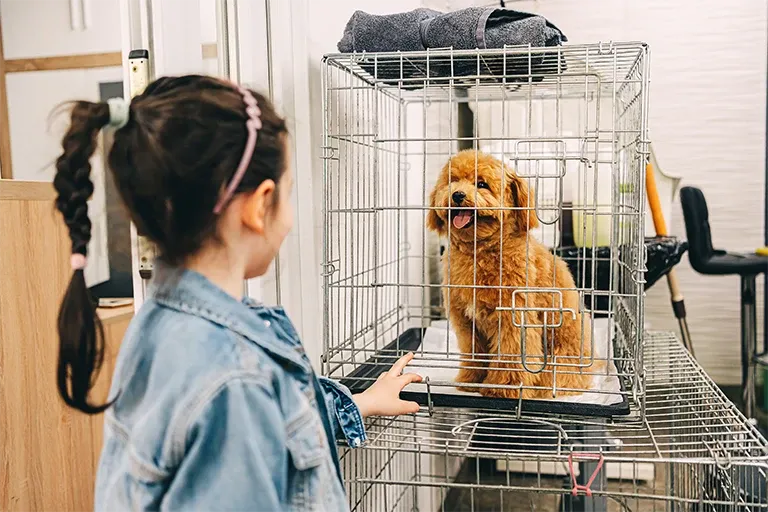
Your new puppy was adorable all day. Then you put them in the crate, turned off the lights, and the crying started. If you’re reading this at 2 a.m., take a breath: almost every puppy cries in the first nights, and it gets better fast with the right routine.
Here’s why puppies cry in the crate, how to tell a real need from protest, a plan for the first night, and how to get everyone sleeping through.
Quick answer: what to do when your puppy cries in the crate
- Put the crate next to your bed for the first weeks.
- Check real needs first: toilet, water, temperature, comfort.
- Take night toilet trips quietly: no lights, no play, straight back to bed.
- Wait for a short pause before responding to protest crying.
- Make the crate great during the day with meals, chews and naps.
- Tire your puppy out with play and training in the evening, then a calm wind-down.
- Add comfort: a blanket that smells like the litter, a T-shirt of yours, a snuggle toy.
- Never punish crying or bang on the crate.
Why do puppies cry in the crate at night?
| Reason | Clues |
|---|---|
| Needs the toilet | Wakes after a few hours, sudden restless crying |
| Lonely | Cries as soon as you leave the room; quiets when you’re close |
| New place | First nights in a new home; everything smells and sounds strange |
| Too much energy | Didn’t get enough play or a proper wind-down |
| Not used to the crate yet | Cries even during the day when shut in |
| Uncomfortable | Too hot, too cold, hungry, thirsty, or teething |
| Learned it works | Crying has been rewarded by being let out |
A puppy who’s just left their mother and littermates has never slept alone. Crying is their way of calling the group back. It’s normal, not naughty.
Should you ignore puppy crying?
Not entirely. The trick is telling needs from protest:
- Needs (toilet, too cold, unwell): respond, calmly and quietly.
- Protest (“I want out, I want company”): wait for a short pause, then respond calmly, or simply let your puppy know you’re there.
Why the pause matters: if the door opens every time your puppy screams, they learn screaming works. If you respond during a quiet moment, they learn quiet works.
But don’t leave a young puppy crying for hours. With the crate next to your bed, you can put your fingers near the crate, speak softly, and your puppy usually settles in minutes.
The first-night plan
| When | What to do |
|---|---|
| Daytime | Short, happy crate sessions: meals in the crate, chews, naps with the door open |
| Evening | Play and short training sessions, then a calm wind-down; no wild games before bed |
| 1–2 hours before bed | Last meal finished; limit water slightly unless it’s hot or your vet says otherwise |
| Right before bed | Toilet trip, then into the crate with a chew and a comfort item |
| Lights out | Crate next to your bed, covered on three sides; calm voice if they fuss |
| First wake-up | Quiet toilet trip on a leash, praise for going, straight back to bed |
| Morning | Out to the toilet immediately when your puppy wakes |
Night toilet breaks by age
Young puppies physically can’t hold it all night. Plan for it rather than fighting it:
| Puppy age | Typical night routine |
|---|---|
| 8–10 weeks | Toilet every 2–3 hours; set an alarm so you go out before the crying |
| 10–12 weeks | Every 3–4 hours |
| 3–4 months | Usually once a night |
| 4–6 months | Most puppies sleep 6–8 hours |
Keep night trips boring: no talking, no play, dim lights. You want your puppy to learn that nights are for sleeping. More in our potty training guide.
Make the crate a place your puppy loves
Night-time crying is much less likely if the crate is already a happy place during the day:
- Feed meals in the crate, at first with the door open.
- Give special chews only in the crate.
- Practice short closures while you’re in the room, then step out briefly.
- Never use the crate as punishment.
Our step-by-step crate training guide walks through the process, and our crate size guide helps you set it up right. A crate that’s too big lets a puppy toilet in one corner.
Comfort that helps
- A blanket or toy that smells like the litter. Ask the breeder for one.
- A T-shirt you’ve worn.
- A snuggle toy with a heartbeat and, if you like, a heat pad made for pets.
- White noise or soft music to mask household sounds.
- A breathable cover over three sides of the crate.
- The right temperature: not too hot, not drafty.
What not to do
- Don’t punish or shout. It adds fear and makes crating harder.
- Don’t bang on the crate.
- Don’t let your puppy out during a screaming fit unless it’s a genuine emergency or toilet need. Wait for a pause.
- Don’t put the crate in a distant room for the first weeks.
- Don’t leave your puppy crated for longer than they can hold their bladder.
How long will the crying last?
Most puppies cry the hardest on nights 1–3, improve noticeably by the end of the first week, and sleep well within one to two weeks. Expect the occasional bad night: after vaccinations, a busy day, or teething.
When it might be more than crying
Talk to your vet or a qualified trainer if:
- Crying turns into panic: frantic scratching, biting the bars, drooling, injuring themselves
- It’s getting worse, not better, after two weeks
- Your puppy is just as distressed in the daytime when shut in, or whenever you leave the room
This can point to confinement anxiety or early separation anxiety, which need a different plan. See our separation anxiety guide.
Related guides and tools
- How to stop a dog from whining
- How to stop puppy biting
- Dog name generator for your new puppy
- Puppy weight calculator
Frequently asked questions
Should I ignore my puppy crying in the crate at night?
Not completely. First rule out a real need: young puppies often need a toilet break during the night. Take them out quietly, then straight back to bed. If all needs are met and the crying is protest, wait for a short pause before responding, so your puppy doesn’t learn that crying opens the door. Keeping the crate next to your bed makes this much easier.
How long will my puppy cry in the crate at night?
Most puppies cry the first few nights in a new home, then settle within one to two weeks if the crate is introduced positively and placed near you. If crying stays intense after two weeks, or turns into panic, look at the setup and talk to your vet or a trainer.
Should I put the crate in my bedroom?
Yes, for the first weeks. Being able to hear, smell and see you is very comforting for a puppy who just left its littermates, and you’ll notice when they need the toilet. Once your puppy sleeps through the night, you can gradually move the crate to its permanent spot.
How often should a puppy go out at night?
As a rough guide: 8–10 weeks, every 2–3 hours; 10–12 weeks, every 3–4 hours; 3–4 months, once a night; 4–6 months, most puppies can sleep 6–8 hours. Every puppy is different, so follow your puppy’s signals.
Should I cover my puppy’s crate at night?
Many puppies settle better with a breathable cover over three sides, which makes the crate feel like a den and blocks distractions. Leave the front open for airflow, keep the room at a comfortable temperature, and make sure your puppy can’t pull the cover in and chew it.
Is it cruel to let a puppy cry in a crate?
Leaving a frightened puppy to scream for hours alone isn’t kind or effective. But short protest crying, while you’re close by and all needs are met, is part of getting used to a new routine. Aim for a crate the puppy already likes, close to you, with quiet reassurance and calm toilet trips.
Note: This article is for general information and isn’t a substitute for advice from your veterinarian. Some links may be affiliate links; we may earn a commission at no extra cost to you.Written with AI assistance. Editorial review in progress. Last updated: . How we create our content