How to Choose a Dog Crate: Size Chart, Types & Setup Tips
How to choose a dog crate: measure your dog, use our crate size chart by breed, compare wire, plastic, wooden and heavy-duty crates, and set it up right.
· Updated · 4 min read

The right crate gives your dog a safe, cozy den. It makes house training easier, keeps them safe when you can’t supervise, and makes travel and vet stays far less stressful. The wrong crate (too big, too small, or easy to escape from) causes the opposite.
This guide helps you choose the right size, type and setup. Once you have one, follow our step-by-step crate training guide.
How to measure your dog for a crate
- Length: measure from the tip of the nose to the base of the tail (not the tip). Add 2–4 inches (5–10 cm).
- Height: with your dog sitting, measure from the floor to the top of the head, or to the ear tips if they stand up. Add 2–4 inches.
- Check: your dog should be able to stand without ducking, turn around easily, and lie down stretched out.
Too big is a problem for house training (one end becomes the toilet). Too small is uncomfortable and unsafe.
Dog crate size chart
| Crate length | Dog weight | Example breeds |
|---|---|---|
| 18–22 in (XS) | Up to 10 lb | Chihuahua, Yorkshire Terrier, Maltese, Toy Poodle |
| 24 in (S) | 10–25 lb | Shih Tzu, Pug, Cavalier King Charles Spaniel, Miniature Dachshund |
| 30 in (M) | 25–40 lb | Beagle, French Bulldog, Cocker Spaniel, Corgi |
| 36 in (L) | 40–70 lb | Border Collie, Siberian Husky, Bulldog, Australian Shepherd |
| 42 in (XL) | 70–90 lb | Labrador, Golden Retriever, German Shepherd, Boxer |
| 48 in (XXL) | 90–110 lb | Rottweiler, Doberman, Bernese Mountain Dog |
| 54 in+ (Giant) | 110 lb+ | Great Dane, Mastiff, Newfoundland, Irish Wolfhound |
Always measure. Body shape varies, and long-legged or long-bodied dogs may need a size up.
Types of dog crates
| Type | Pros | Cons | Best for |
|---|---|---|---|
| Wire | Good airflow and visibility, folds flat, usually has a divider | Less den-like (add a cover), can rattle, some dogs escape | Most puppies and house training |
| Plastic (airline-style) | Den-like, cozy, many are airline-approved | Less airflow, bulkier to store | Travel, dogs who like privacy |
| Soft-sided | Light and portable | Easy to chew or escape from | Calm, crate-trained dogs; travel |
| Wooden / furniture-style | Looks like furniture (end table, TV stand) | Expensive, can be chewed, less airflow | Calm adult dogs in living spaces |
| Heavy-duty (steel/aluminum) | Very strong, escape-resistant | Heavy and expensive | Escape artists, strong chewers, car travel |
Wire crates
The most versatile choice for puppies. Look for a divider panel, two doors (front and side) for flexible placement, a removable tray, and secure latches.
Wooden crates
Furniture-style crates blend into your home and double as a side table. They suit calm adult dogs who are already crate-trained. Puppies and chewers can damage them. Choose pet-safe finishes and plenty of ventilation.
Heavy-duty crates
For dogs who bend wire bars or break out, a reinforced steel or aluminum crate is safer. If your dog panics and tries to escape, that may be separation anxiety, not a crate problem. Injuries from escape attempts are common, so talk to your vet or a behavior professional rather than just buying a stronger crate.
Where to put the crate
- Puppies: in your bedroom at night for the first weeks, and in the family area during the day.
- Away from direct sunlight, radiators and drafts.
- Somewhere your dog can see and hear family life, not isolated in a garage or basement.
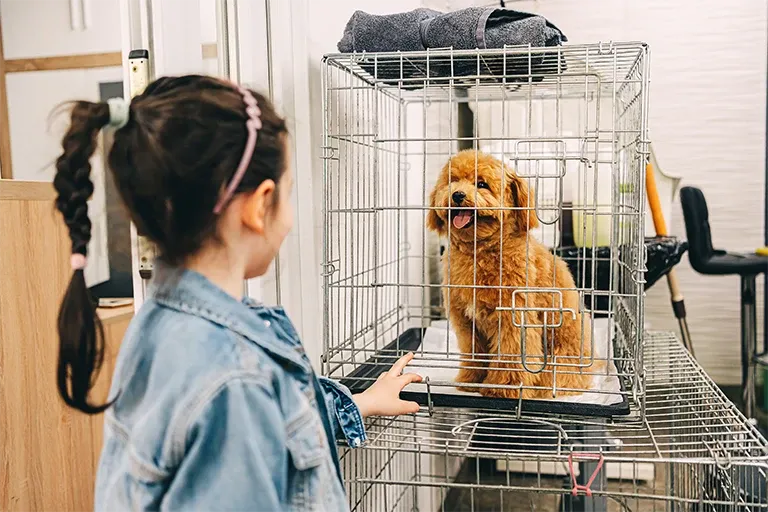
Teach children that the crate is the dog’s private space: no reaching in, crawling in or disturbing a resting dog.
Setting up the crate
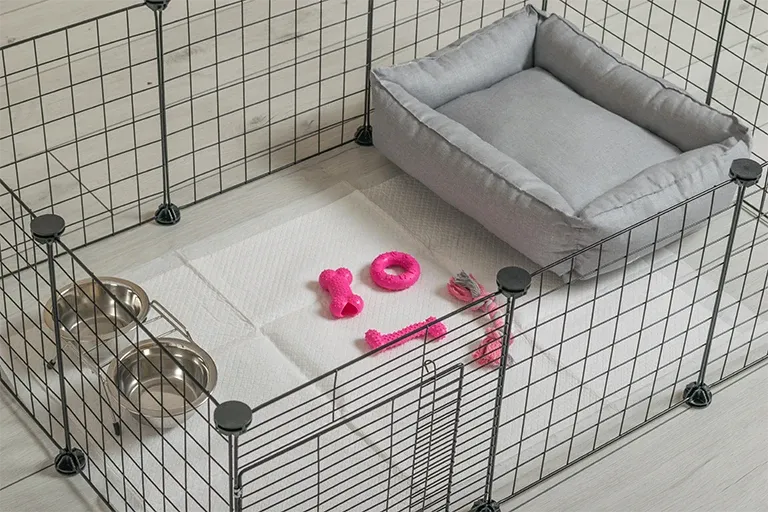
- Bedding: a washable, chew-resistant crate mat (see below).
- Cover: a breathable cover over three sides helps many dogs relax.
- Chew toys: a safe chew or a stuffed food toy for settling.
- Water: for longer periods, a clip-on bowl, or offer water before and after.
- Remove collars with tags that could catch on bars.
Choosing a crate mat
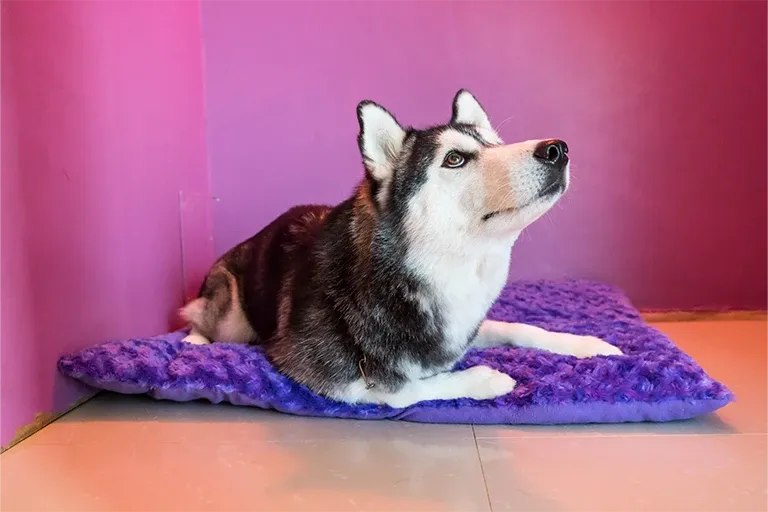
- Puppies and chewers: durable, chew-resistant pads, or nothing at all if they shred and eat bedding.
- House training: waterproof, machine-washable mats.
- Senior or arthritic dogs: orthopedic memory-foam mats.
- Hot climates: cooling mats or raised cots.
How long can a dog stay in a crate?
| Age | Maximum daytime crate time |
|---|---|
| 8–10 weeks | 30–60 minutes |
| 11–14 weeks | 1–3 hours |
| 15–16 weeks | 3–4 hours |
| Adult dogs | Ideally no more than 4–6 hours at a time |
Overnight crating is fine for most dogs once they’re comfortable, as long as they get exercise, company and toilet breaks. A crate should never be used for punishment or as an all-day solution.
Related guides
- Crate training a puppy: step-by-step
- Potty training guide
- How to stop a puppy whining in the crate
- How to stop a dog from chewing
Frequently asked questions
What size crate does my dog need?
Measure your dog from nose to base of tail and add 2–4 inches for length; measure from floor to top of head (or ear tips if they stand up) when sitting and add 2–4 inches for height. Your dog should be able to stand, turn around and lie down stretched out, but not have much extra room.
Should I buy a crate for my puppy’s adult size?
Yes, usually. Buy a crate for the expected adult size with a divider panel, and move the divider as your puppy grows. That prevents them from using one end as a toilet.
How long can a dog stay in a crate?
Puppies can typically manage about one hour per month of age (up to a maximum of around 3–4 hours during the day). Adult dogs shouldn’t routinely be crated for more than about 4–6 hours during the day. Overnight crating is fine once they’re comfortable, as long as they get exercise and toilet breaks.
Should I cover my dog’s crate?
Many dogs settle better with a breathable cover over three sides, which makes it den-like. Leave the front open for airflow, avoid covers in hot weather, and make sure your dog can’t pull the fabric in and chew it.
What is the difference between a crate and a kennel?
The words are often used interchangeably. Generally a crate is an indoor, portable enclosure (wire, plastic or furniture-style), while a kennel can mean a larger outdoor run or a boarding facility. Airline “kennels” are hard-sided plastic travel crates.
Is it OK to put a bed in my puppy’s crate?
Yes, but choose a durable, chew-resistant mat or bed for puppies, and remove it if your puppy shreds and eats it. Some puppies also urinate on soft bedding at first; a washable crate pad works well during house training.
Note: This article is for general information and isn’t a substitute for advice from your veterinarian. Some links may be affiliate links; we may earn a commission at no extra cost to you.Written with AI assistance. Editorial review in progress. Last updated: . How we create our content