How to Stop a Dog’s Nail From Bleeding (Fast, at Home)
Cut the quick? How to stop a dog’s nail from bleeding in minutes with styptic powder or home remedies like cornstarch, flour or soap, and when to call a vet.
· Updated · 4 min read
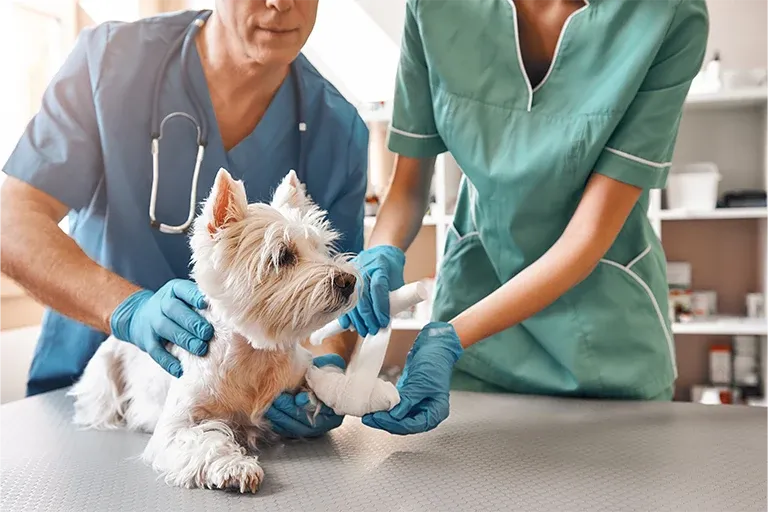
You were trimming your dog’s nails, there was a yelp, and now there’s blood on the floor. Take a breath. Cutting the quick (the blood vessel inside the nail, or claw) happens to almost every dog owner and groomer at some point. It looks dramatic, but it’s rarely serious and you can usually stop it in a few minutes.
Quick answer: how to stop a dog’s nail from bleeding
- Stay calm and keep your dog still. Ask a helper to hold and comfort them.
- Press a clotting agent into the nail tip: styptic powder is best. Cornstarch or flour work if you don’t have any.
- Hold gentle, steady pressure with a clean cloth or paper towel for 2–5 minutes. Don’t peek every few seconds.
- Keep your dog calm and off their feet for 20–30 minutes so the clot holds.
- Call your vet if it’s still bleeding after 20–30 minutes of proper pressure.
Method 1: Styptic powder (fastest)
Styptic powder (like Kwik Stop) contains a clotting agent, often ferric subsulfate, plus a mild anesthetic in some brands. It’s what groomers and vets use.
- Pour a little powder into your palm or the lid.
- Wipe away excess blood with a tissue.
- Dip the bleeding nail into the powder, or press a damp cotton swab of powder firmly onto the tip.
- Hold pressure for 30–60 seconds.
- Reapply once if it seeps.
It may sting briefly, so expect a flinch. Keep a styptic pencil or powder in your grooming kit so it’s ready next time.
Method 2: Without styptic powder (home remedies)
No styptic powder? These kitchen-cupboard options work well for minor bleeding:
| Remedy | How to use | How well it works |
|---|---|---|
| Cornstarch | Press a pinch into the nail tip; hold pressure 3–5 min | Very good, the best home alternative |
| Flour | Same as cornstarch | Good |
| Baking soda | Mix with a little cornstarch, then apply | Good |
| Bar of plain soap | Press the nail into a dry, unscented bar and hold 2–3 min | Good: forms a plug |
| Cold compress / ice in a cloth | Hold against the toe 5 min | Fair, slows bleeding |
| Clean cloth and pressure alone | Hold firm pressure 5–10 min | Works, just slower |
Avoid alcohol, hydrogen peroxide and anything perfumed. They sting, can damage tissue, and don’t help clotting.
After the bleeding stops
- Keep your dog quiet for at least 30 minutes. Running or jumping can reopen the nail.
- Skip the dog park and muddy walks for a day to keep the tip clean.
- Discourage licking. A bit is fine; constant licking can restart bleeding.
- Check it the next day. The tip should look dry and dark.
- Watch for infection over the next few days: swelling, heat, pus, a bad smell or limping mean a vet visit.
When to see a vet
Call your vet or an emergency clinic if:
- Bleeding continues after 20–30 minutes of firm pressure
- The nail is torn, split or hanging, not just trimmed short (these are painful and often need the damaged part removed)
- You can see bone, or the toe is swollen
- Your dog takes blood thinners or has a known clotting disorder
- There are signs of infection in the following days
Why does a dog’s nail bleed so much?
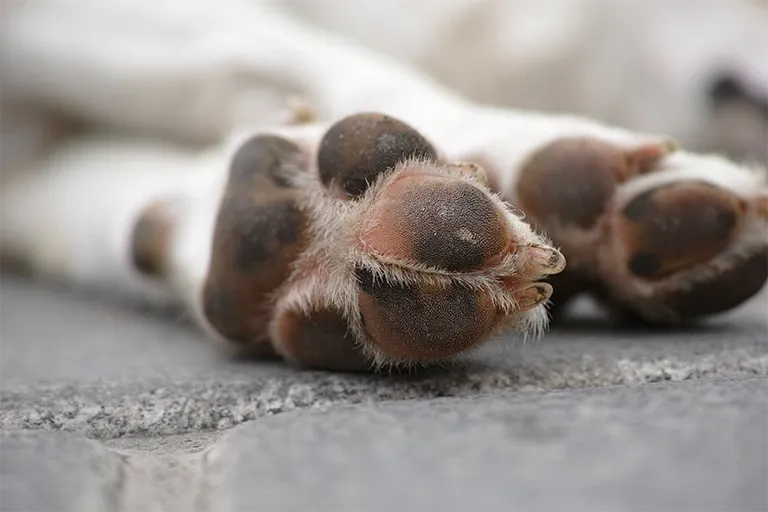
Inside each nail is the quick, a core of blood vessels and nerves. In light-colored nails it shows as a pink area; in black nails it’s invisible. Paws have a rich blood supply, so a small cut can drip for a while, and because dogs move around, it gets spread across the floor. It looks like much more blood than it is.
When nails are left long, the quick grows longer too, which makes it easier to cut on the next trim.
How to avoid cutting the quick next time
- Trim little and often. Every 2–4 weeks, take just the tip. Regular trims make the quick recede over time.
- Cut at a 45° angle, following the natural curve of the nail, and stay well in front of the pink area.
- On black nails, take thin slices. Stop when the cut surface shows a small dark or gray dot in the center: that’s the quick approaching.
- Use sharp clippers or a nail grinder. Grinders give more control and make it easier to stop before the quick.
- Use good light and a non-slip surface.
- Make it pleasant. Pair handling paws with treats so your dog stays still. A lick mat with peanut butter (xylitol-free) on the wall or floor works wonders.
- Don’t forget dewclaws. They don’t wear down on walks and can curl into the pad.
Build a dog first-aid kit
Keep these together so you’re never searching mid-crisis:
- Styptic powder or pencil
- Cornstarch (in a small sealed pot)
- Gauze pads and self-adhesive bandage wrap
- Saline wound wash
- Blunt-tipped scissors and tweezers
- A dog bootie or sock to protect a sore paw
- Your vet’s and nearest emergency clinic’s phone numbers
Related guides
- How to reduce dog shedding with simple grooming habits
- Why dogs lick their paws, and how to stop it
- Dog training glossary: what is “the quick”?
Frequently asked questions
How long does it take for a dog’s nail to stop bleeding?
With styptic powder and firm pressure, most quicked nails stop within 1–2 minutes. With cornstarch, flour or plain pressure, expect 5–10 minutes. If it’s still bleeding steadily after 20–30 minutes of proper pressure, call your vet.
Will a dog’s nail stop bleeding on its own?
Usually yes. Blood clots naturally within several minutes for most healthy dogs. But it can be messy and slower if your dog keeps moving or licking, so applying pressure and a clotting agent speeds things up.
How do I stop a dog’s nail bleeding without styptic powder?
Press a pinch of cornstarch or flour into the nail tip and hold gentle pressure for a few minutes. You can also push the nail into a bar of plain, unscented soap, or hold a cold compress against it. Avoid anything that stings, like alcohol or hydrogen peroxide.
Can a dog bleed to death from cutting the quick?
It’s extremely unlikely in a healthy dog. The amount of blood looks dramatic but is small. Dogs with clotting disorders or on certain medications may bleed for longer. In that case, or if bleeding won’t stop, contact your vet.
Should I bandage my dog’s nail after cutting the quick?
Usually not. Once bleeding stops, keep your dog calm for 30 minutes and avoid long walks, dirt and dog parks for a day. If the nail was torn rather than trimmed, or your dog keeps licking it, a light bandage or dog bootie may help. Never wrap tightly, and remove within a few hours.
How do I see the quick on black dog nails?
You can’t see it through dark nails, so trim tiny slivers at a time. Look at the cut surface: when you see a small dark or grayish dot in the center, you’re near the quick. Stop there.
Note: This article is for general information and isn’t a substitute for advice from your veterinarian. Some links may be affiliate links; we may earn a commission at no extra cost to you.Written with AI assistance. Editorial review in progress. Last updated: . How we create our content