Yorkshire Terrier Breed Guide: Temperament, Types, Care & Health
Yorkshire Terrier guide: size, temperament, the types of Yorkies (teacup, parti, Biewer), grooming, health problems, training tips and whether one suits you.
· Updated · 6 min read
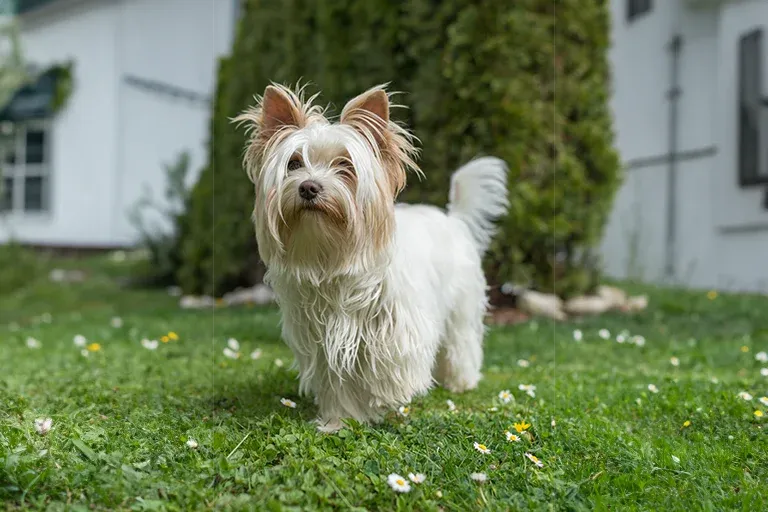
The Yorkshire Terrier, or Yorkie, is a toy breed with a terrier’s heart. Weighing just 4–7 pounds, Yorkies are bold, curious, affectionate and surprisingly feisty, with a long, silky blue-and-tan coat that makes them one of the most recognizable dogs in the world.
They’re consistently among the most popular breeds in the US, especially with city dwellers. But that tiny package comes with big terrier energy, a strong voice and real grooming needs.
Yorkshire Terrier quick facts
| Breed group | Toy (AKC); Terrier (FCI) |
| Origin | Yorkshire and Lancashire, England, mid-1800s |
| Height | 7–8 in (18–20 cm) |
| Weight | Up to 7 lb (3.2 kg) |
| Life expectancy | 11–15 years |
| Coat | Long, fine, silky, single coat that grows continuously |
| Colors | Blue and tan (puppies are born black and tan) |
| Shedding | Very low |
| Energy | Moderate |
| Barking | High |
| Good for | Apartments, singles, seniors, families with older kids |
History: from mill ratters to lap dogs
Yorkies were developed in the 19th century by working people in the mills and mines of northern England, who needed small, tough terriers to catch rats. Ancestors are thought to include the Clydesdale, Paisley, Skye and Waterside terriers, brought by Scottish workers.
By the late 1800s the breed’s silky coat had caught the eye of Victorian high society, and the Yorkie moved from the mill floor to the lap. The famous Yorkie Huddersfield Ben shaped much of the modern breed, and during World War II a Yorkie named Smoky became a celebrated war dog and one of the first recorded therapy dogs.
Temperament and personality
- Bold and confident. Yorkies don’t know they’re small and will happily challenge much bigger dogs.
- Affectionate. Very attached to their people; many follow their owner from room to room.
- Alert and vocal. Excellent watchdogs that bark at new sounds and visitors.
- Curious and playful. They enjoy toys, games and exploring.
- Independent streak. Classic terrier stubbornness can make training a test of patience.
Well-socialized Yorkies are friendly with strangers and other pets. Under-socialized ones can become yappy, snappy or anxious.
Types of Yorkshire Terriers
Officially there’s only one Yorkshire Terrier, but you’ll see several labels:
| Label | What it means |
|---|---|
| Standard Yorkie | The breed as described by kennel clubs: blue and tan, up to 7 lb |
| “Teacup” or “micro” Yorkie | A marketing term for very small Yorkies (often under 4 lb). Not a recognized type, and extremely small dogs have higher risks of low blood sugar, fractures, liver shunts and dental problems. Be wary of breeders selling them. |
| Parti Yorkie | Tri-colored (white, blue/black and tan). A genetic variation within the breed, not the standard show coloring |
| Biewer Terrier | Originally developed from parti Yorkies in Germany; now recognized by the AKC as a separate breed |
| “Doll face” vs “Classic” | Informal terms for shorter-muzzled or more traditional heads, not official types |
| Yorkie mixes | Popular crosses like the Yorkipoo (Poodle), Morkie (Maltese) and Chorkie (Chihuahua) |
The Silky Terrier and Australian Terrier are related but separate breeds.
Is a Yorkie right for you?
A great fit if you:
- Live in an apartment or small home
- Want a portable companion who loves to be with you
- Are home a lot, or can bring your dog along
- Have allergies and want a low-shedding dog
- Enjoy grooming, or are happy to budget for a groomer
Probably not ideal if you:
- Have toddlers or very young children
- Want a quiet dog
- Want a jogging or hiking partner for long distances
- Are away from home for long hours
Exercise needs
Yorkies need about 30 minutes of activity a day: a couple of short walks plus indoor play. They love games of fetch with small toys, puzzle feeders and learning tricks. Use a harness instead of a collar: Yorkies are prone to tracheal collapse, and pulling on a collar puts pressure on the windpipe.
Training a Yorkshire Terrier
Yorkies are smart and learn quickly, but they’re also independent. Keep training short, fun and reward-based:
- Start socialization early: people, dogs, sounds, handling, car rides.
- House training needs patience. Toy breeds often take longer. Use a consistent schedule and our potty training guide.
- Teach a “quiet” cue early. See how to stop excessive barking.
- Don’t let small-dog behavior slide. Jumping, growling over toys or snapping would be addressed in a big dog. Treat your Yorkie the same.
- Avoid carrying them everywhere. Let them walk, sniff and meet the world on four paws.
Training a Yorkie puppy
- Use tiny treats (pea-sized or smaller) so your puppy doesn’t fill up after a few reps.
- Plan for house training to take months, not weeks. Frequent trips outside, an indoor pad area if needed, and big rewards.
- Socialize gently. Let your puppy meet calm people and dogs on the ground, at their own pace.
- Handle daily for grooming: brushing, paws, teeth and ears, paired with treats.
- Teach “quiet” before barking becomes a habit, and reward calm at windows and doors.
Grooming
The Yorkie coat is fine and silky, more like human hair than fur, and it keeps growing.
- Long show coat: daily brushing, frequent baths, and often wrapping the hair to protect it.
- Short “puppy cut”: the most popular pet style, trimmed every 4–8 weeks by a groomer, with brushing a few times a week.
- Top knot: hair above the eyes is often tied up to keep it out of the eyes.
- Teeth: brush daily if possible. Yorkies are very prone to dental disease.
- Nails: trim every 2–4 weeks. Here’s what to do if you cut the quick.
Health problems in Yorkies
Yorkies are generally long-lived, but watch for:
- Dental disease: crowded teeth trap tartar; many Yorkies need regular dental cleanings.
- Patellar luxation: kneecaps slipping out of place; you may see skipping or hopping steps.
- Tracheal collapse: a honking cough, especially when excited or pulling on a collar.
- Hypoglycemia: low blood sugar, especially in puppies and very small dogs. Feed small, frequent meals.
- Portosystemic (liver) shunt: abnormal blood flow around the liver; signs include stunted growth and behavioral changes after meals.
- Legg-Calvé-Perthes disease: degeneration of the hip joint, causing lameness in young dogs.
- Retained puppy teeth: often need removing to prevent dental problems.
Responsible breeders screen for patella and eye problems. Buy from a breeder who health-tests, or adopt from a Yorkie rescue.
Feeding
Small breeds have fast metabolisms. Feed a quality small-breed food in 2–3 measured meals a day (puppies 3–4), and keep treats under 10% of daily calories. Tiny kibble or wet food suits small mouths. Avoid free-feeding, since excess weight puts strain on knees and the windpipe.
Cost of owning a Yorkie
- Puppy from a reputable breeder: typically $1,000–$3,500 in the US
- Adoption: $150–$500
- Grooming: $50–$90 every 4–8 weeks
- Food: $20–$40 a month
- Routine vet care and dental cleanings: budget $400–$1,000 a year
Related guides and tools
- Dog age calculator: Yorkie years to human years
- Dog name generator: cute names for small dogs
- Dog shedding remedies
- Poodle breed guide
Frequently asked questions
How big do Yorkshire Terriers get?
The breed standard calls for a maximum of 7 lb (3.2 kg), and most adults weigh 4–7 lb and stand 7–8 inches (18–20 cm) at the shoulder. Some pet Yorkies grow larger, which is perfectly healthy.
Are Yorkies good with children?
They can be, with older, gentle children. Because Yorkies are tiny and fragile, they can be injured by toddlers who drop or squeeze them, and may snap if handled roughly. Supervise all interactions.
Do Yorkies shed?
Very little. Their coat is hair-like, similar to human hair, and grows continuously rather than shedding seasonally. That makes them a common choice for people with mild allergies, though no dog is truly hypoallergenic.
Are Yorkies easy to potty train?
Yorkies are known for being slow to house-train, like many toy breeds. Their small bladders need frequent trips out, and they dislike cold or wet weather. A strict schedule, crate training and lots of rewards help. Indoor potty options can be useful.
How long do Yorkies live?
Typically 11–15 years, and many live into their late teens with good dental care, a healthy weight and regular vet checks.
Do Yorkies bark a lot?
Yes, Yorkies are alert, vocal little dogs and make keen watchdogs. Training a “quiet” cue, blocking window views and giving enough mental stimulation keep barking manageable.
Note: This article is for general information and isn’t a substitute for advice from your veterinarian. Some links may be affiliate links; we may earn a commission at no extra cost to you.Written with AI assistance. Editorial review in progress. Last updated: . How we create our content