Does a Dog Whistle Stop Barking? How to Use One the Right Way
Does a dog whistle stop barking? Only as a trained cue. How to teach a whistle “quiet”, which frequency to use, and why it won’t silence a neighbor’s dog.
· 5 min read
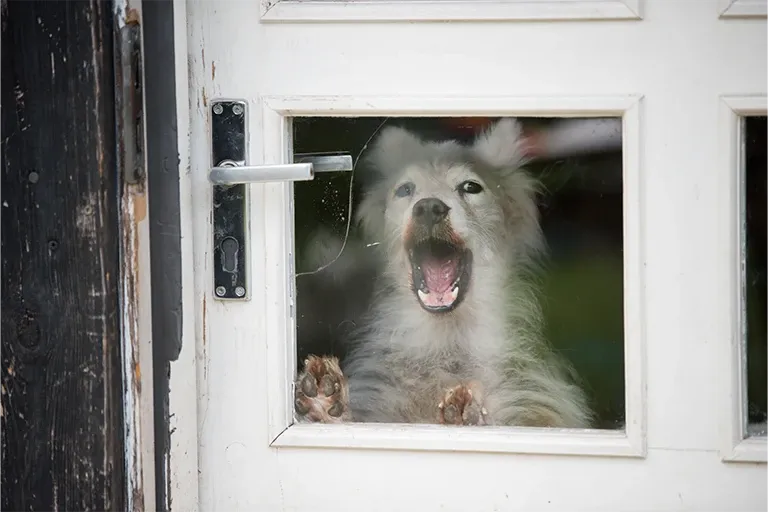
You’ve probably seen the promise: “Blow this whistle and any dog will stop barking.” If only it were that easy. The honest answer is that a dog whistle doesn’t stop barking by magic, but used the right way, as a trained cue, it can be one of the most effective barking tools you have.
Here’s what a whistle can and can’t do, how to train it step by step, and why it won’t silence the neighbor’s dog.
Quick answer: does a dog whistle stop barking?
- On its own: briefly, at best. A sudden sound interrupts barking for a second or two, then most dogs ignore it.
- As a trained cue: yes. When the whistle always means “come to me for a treat” or “quiet means reward”, it can stop barking reliably.
- For a neighbor’s dog: not really. An untrained dog doesn’t know what the whistle means.
- The frequency matters less than consistency: pick a tone your dog clearly hears and always use the same one.
Why a whistle alone doesn’t work
The first few times you whistle, your dog may pause and look around. That’s the startle effect: a new, unexpected sound grabs attention. But a sound with no meaning quickly becomes background noise. Within days, most dogs barely notice it.
And if the whistle is meant to be unpleasant, like a loud ultrasonic blast, it works through discomfort, not learning. Dogs often get used to it, some become more anxious, and anxious dogs tend to bark more.
The key insight: barking has a cause. Dogs bark to alert, to ask for something, out of boredom, or out of fear. A whistle can help you interrupt the barking and ask for something else, but you still need to address why your dog barks. Our main guide to excessive barking explains each type.
How to train a whistle to stop barking
You can use a physical whistle or our free online dog whistle, which lets you pick a frequency, saves your dog’s favorite, and works on any phone.
Step 1: Pick your whistle and frequency
- Choose a tone your dog clearly reacts to. The online whistle’s frequency finder helps you find it.
- Decide on one pattern, for example two short pips, and always use the same one.
Step 2: Charge the whistle (no barking yet)
- In a quiet room, play your whistle pattern.
- Immediately give a high-value treat (chicken, cheese).
- Repeat 10–15 times per session, over 2–3 days.
Your dog doesn’t have to do anything yet. You’re teaching that the whistle means something great is coming. Soon your dog will turn and run to you when they hear it.
Step 3: Practice with distractions, not barking
Whistle when your dog is mildly distracted, like sniffing the garden or playing with a toy, and reward when they come to you. This builds a strong response before you use it in a hard situation.
Step 4: Use it at the start of barking
- When your dog starts barking at the window, door or fence, whistle once.
- Your dog turns and comes to you, and barking stops naturally because they’re busy getting their reward.
- Reward generously, and keep them with you for a few seconds (a sit, a game).
Use the whistle early, after one or two barks, not after a five-minute barking frenzy. At that point your dog is too worked up to listen.
Step 5: Add a “quiet” cue (optional)
Once the whistle reliably calls your dog away, you can start rewarding the silence itself: whistle, wait for 2–3 seconds of quiet, then reward. Gradually lengthen the quiet before the treat.
Step 6: Keep the whistle special
- Never use it to call your dog for something unpleasant, like a bath or the end of a walk.
- Always follow it with a reward, at least until it’s rock solid; then reward often but not every time.
- Don’t whistle repeatedly. If your dog ignores it, the situation is too hard. Make it easier and practice more.
Which frequency should you use?
| Frequency | Who hears it | Good for |
|---|---|---|
| 3–6 kHz | Everyone | Outdoor recall at long distance (gundog-style whistles) |
| 8–12 kHz | Everyone, sounds shrill | Clear cue at home and in the park |
| 15–18 kHz | Children and younger adults | Discreet training when others are around |
| 18–22 kHz | Mostly dogs | The closest a phone gets to a “silent” whistle |
| 23–54 kHz | Dogs only | Physical silent whistles only; phones can’t produce this |
More on frequencies, and why no website can play a true 40 kHz tone, on our online dog whistle page.
Can a whistle stop a neighbor’s dog barking?
Usually not, and it can backfire:
- The dog has no idea what your whistle means, so it’s just a strange noise.
- Startle effects fade within days.
- A stressed or territorial dog may bark more at an unfamiliar sound.
- Ultrasonic blasts can upset other animals, including your own pets.
What works better:
- Talk to your neighbor in a friendly way. Many owners don’t know their dog barks when they’re out.
- Suggest specifics: blocking the view of the street, more exercise, a dog walker, or our separation anxiety guide if the barking only happens when they’re away.
- Keep a log of times and duration if the barking continues.
- Contact local animal control or a mediation service as a last resort.
Whistles vs ultrasonic bark devices
| Training whistle | Ultrasonic bark deterrent | |
|---|---|---|
| How it works | Cue that predicts a reward | Unpleasant sound to interrupt barking |
| Teaches an alternative? | Yes: come, quiet, look at me | No |
| Long-term results | Good with consistent training | Mixed; many dogs habituate |
| Welfare | Positive | Can cause stress or fear |
| Affects other animals | Only when you use it | Can disturb other pets and wildlife |
Tips for the most common barking situations
- Barking at the door: whistle, reward your dog on their bed, and use our doorbell desensitization sounds to make the doorbell less exciting.
- Barking at people passing the window: block the view, then whistle your dog away after one bark.
- Barking in the garden: practice recall with the whistle on a long line first, then use it when barking starts.
- Barking when left alone: a whistle can’t help when you’re not there. That’s often separation anxiety; see our step-by-step plan.
Related guides and tools
- Free online dog whistle with training signals
- How to stop excessive barking
- Online dog clicker
- Dog training glossary
Frequently asked questions
Does a dog whistle stop barking?
Not by itself. A sudden whistle can interrupt barking for a moment because it surprises the dog, but the effect fades quickly. A whistle works when it’s trained as a cue, for example “come to me” or “quiet”, and rewarded every time. Then it can stop barking reliably.
What frequency dog whistle stops barking?
There’s no magic frequency. Any tone your dog can clearly hear works, as long as you use the same one consistently and pair it with a reward. With an online whistle, 10–20 kHz is a good range; physical “silent” whistles are tuned around 23–54 kHz.
Can I use a dog whistle to stop my neighbor’s dog barking?
It rarely works and isn’t a good idea. The dog hasn’t learned what the whistle means, so at best it’s startled briefly, and repeated blasts can make a stressed or territorial dog bark more. Talking to the neighbor, or contacting local animal control if needed, is more effective.
Are ultrasonic bark deterrents cruel?
They’re designed to be unpleasant, so they work through discomfort, not learning. Evidence on their effectiveness is mixed: many dogs get used to them, and some become anxious. They can also affect other pets and wildlife. Reward-based training addresses the cause of barking instead.
Can humans hear a dog whistle?
Classic “silent” whistles (above about 20 kHz) are inaudible to most adults, though children and young people may hear some of them. Many training whistles, like gundog whistles, are deliberately audible to people. A tone doesn’t need to be silent to work; it needs to be consistent.
Is a dog whistle bad for dogs?
Used sensibly, no. Avoid blowing a whistle or playing tones right next to your dog’s ears, keep the volume moderate, and don’t use it repeatedly to scare your dog. As a short training cue followed by a reward, it’s perfectly safe.
Note: This article is for general information and isn’t a substitute for advice from your veterinarian. Some links may be affiliate links; we may earn a commission at no extra cost to you.Written with AI assistance. Editorial review in progress. Last updated: . How we create our content