Dog Fireworks Anxiety: How to Keep Your Dog Calm (Before and On the Night)
Dog scared of fireworks? A week-by-week plan to prepare, how to keep your dog calm on the night, what to avoid, and when to ask your vet about medication.
· 6 min read
For many dogs, fireworks night is the scariest night of the year. Sudden bangs, flashes and the smell of smoke can turn a confident dog into a trembling, panting ball of fear. Some try to escape, and shelters report more lost dogs around fireworks holidays than at almost any other time of year.
The good news: with some preparation, most dogs can get through fireworks much more calmly. Here’s what to do in the weeks before, on the day, and while the fireworks are going off.
Quick answer: how to help a dog scared of fireworks
- Start preparing now: gradual sound training 4–6 weeks ahead works best.
- Build a safe den where your dog can hide.
- Walk your dog early, before dark, on a secure harness.
- Close windows and curtains, and play music or white noise.
- Give a long-lasting chew or lick mat to keep your dog busy.
- Stay home, stay calm, and comfort your dog if they want it.
- Talk to your vet about medication if your dog panics.
- Check ID tags and microchip details, in case your dog bolts.
Why are dogs scared of fireworks?
Dogs hear far more than we do, including higher frequencies and quieter sounds, so fireworks are loud, sudden and unpredictable from their point of view. There’s no way to tell where the bangs come from, or when they’ll stop. Add flashing lights, burning smells and vibrations, and it’s easy to see why fireworks are so frightening.
Noise fear is very common. In a large Finnish study of nearly 14,000 dogs, noise sensitivity was the most common anxiety-related problem, affecting around a third of dogs, and fireworks were the most frequently feared noise. Without help, it usually gets worse with every scary experience.
Signs your dog is scared
- Trembling, shaking or panting
- Hiding under furniture, in the bathroom or behind you
- Pacing, restlessness, trying to dig or escape
- Clinginess, or wanting to get out of the house
- Barking, howling or whining
- Drooling, yawning, lip licking
- Refusing food, even favorite treats
- Accidents indoors
4–6 weeks before: start sound training
The most effective long-term approach is desensitization and counter-conditioning: playing firework sounds very quietly while your dog enjoys something great, and slowly increasing the volume as long as they stay relaxed.
Our free sound desensitization player has fireworks and thunderstorm sounds with 10 volume levels. You tell it how your dog reacted, and it guides you up or down the levels:
- Start at level 1, barely audible, while your dog eats or plays.
- Keep sessions short: 2–5 minutes, once or twice a day.
- Move up a level only after your dog stays calm three times in a row.
- If your dog shows fear, stop and go back down two levels.
Even if you start late, a couple of weeks of practice can take the edge off.
1–2 weeks before: prepare the home
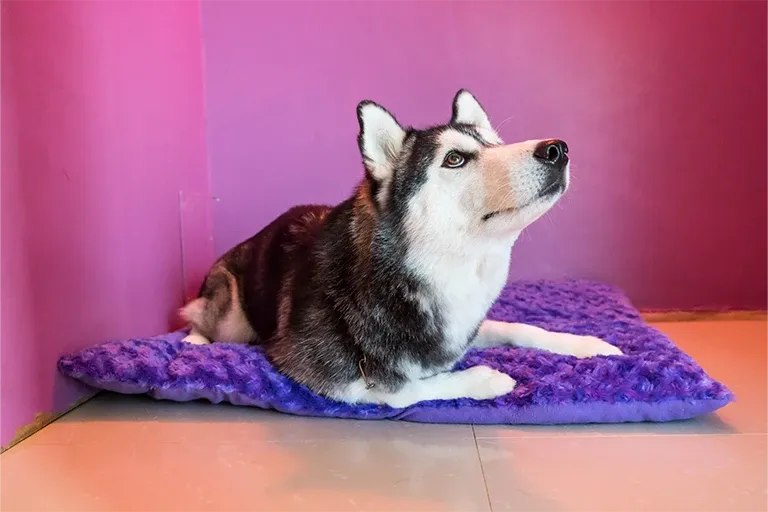
Build a safe den
Pick a quiet room, ideally with few windows, such as an inner hallway, a bathroom or under the stairs. Set up:
- A covered crate (door open) or a bed in a corner, with blankets to burrow into
- A worn T-shirt that smells of you
- Water, chews and favorite toys
Spend a few minutes there with your dog each day, with treats and calm play, so it becomes a happy place before the big night. If your dog already has a favorite hiding spot, use that. See our crate training guide for making a crate feel safe.
Talk to your vet
If your dog has panicked during fireworks before, book a vet appointment now, not on December 31st. Your vet can discuss:
- Prescription medication for noise aversion. In the US, a medication called Sileo (dexmedetomidine gel) is approved specifically for noise aversion in dogs. Vets may also prescribe other short-term options.
- A test dose before the night, to see how your dog responds.
- Longer-term treatment if your dog has fear of other noises too.
Avoid giving human medicines or over-the-counter sleep aids without veterinary advice. Some only sedate the body without reducing fear, which can make the experience worse.
Practice with calming aids
If you want to try a pressure wrap (like a ThunderShirt) or a pheromone diffuser (like Adaptil), introduce them on calm days first. A wrap that only comes out on scary nights can become a warning sign.
Check ID and the garden
- Make sure your dog’s collar tag and microchip details are up to date.
- Check fences and gates for gaps. Frightened dogs jump and dig escapes they’d never normally attempt. See our tips on fence-proofing.
On the day
| Time | What to do |
|---|---|
| Morning | A longer walk or play session to tire your dog out |
| Afternoon | Feed dinner a little earlier than usual; some dogs won’t eat once the bangs start |
| Before dark | Last toilet break and short walk, on a harness and leash, even in your own garden |
| Early evening | Close windows, curtains and blinds; turn on lights so flashes are less visible |
| From dusk | Turn on music, TV or white noise at a comfortable volume |
| Before the bangs | Give a long-lasting chew, stuffed food toy or lick mat in the den |
Never take your dog to a fireworks display, even a dog that seems fine. It’s far louder up close, and a good experience isn’t guaranteed.
During the fireworks
- Stay home and stay calm. Dogs read our body language. A relaxed, normal voice helps more than worried fussing.
- Comfort your dog if they want it. Petting and closeness don’t reinforce fear. Science doesn’t support that old idea.
- Let your dog choose. If they want to hide under the bed or in the bathroom, let them. Never drag them out.
- Distract gently: play a favorite game, practice easy tricks for treats, or scatter treats to sniff out. Stop if your dog is too stressed to eat.
- Mask the noise: keep music, TV or white noise on, and close doors between your dog and the windows.
- Don’t punish fearful behavior like barking, hiding or accidents. It only adds to the fear.
- Keep doors closed and be careful when guests come and go: a frightened dog can bolt in a second.
After the fireworks
- Check the garden for spent fireworks, sticks and debris before letting your dog out. Firework remains can be toxic or sharp.
- Expect a slow recovery. Some dogs stay jumpy for a day or two.
- Keep walks on leash for a few days, since fireworks often continue sporadically.
- Note how your dog coped. If it was a bad night, start sound training early next time, and ask your vet about a plan.
Puppies and fireworks
Puppies who experience fireworks in a calm, positive way are less likely to develop noise fear later. Stay with your puppy, keep the atmosphere relaxed, offer treats and play during the bangs, and start sound training at low volume well ahead of time.
Related guides and tools
- Sound desensitization player: fireworks, thunder and more
- Separation anxiety in dogs: step-by-step plan
- How to stop a dog from whining
- Pet behavior analysis tool
Frequently asked questions
How do I calm my dog during fireworks?
Walk your dog before dark, close windows and curtains, play music or white noise to mask the bangs, and give access to a cozy den with a long-lasting chew or lick mat. Stay calm and close by, comfort your dog if they come to you, and never force them out of a hiding spot.
Is it OK to comfort a scared dog during fireworks?
Yes. Comforting a frightened dog doesn’t “reward” or reinforce fear. Calm petting, a soothing voice and simply being nearby can help. Follow your dog’s lead: some want contact, others prefer to hide.
How long before fireworks should I start preparing my dog?
Ideally 4–6 weeks before, so there’s time for gradual sound desensitization training. Even a week of preparation helps: set up a safe den, plan the evening, and talk to your vet if your dog has had severe reactions before.
Can I give my dog Benadryl for fireworks?
Don’t give any medication without asking your vet. Antihistamines like Benadryl can make dogs drowsy but don’t reliably reduce fear, and doses depend on the dog. Vets have more effective options for noise fear, including medication approved specifically for noise aversion in dogs.
Do ThunderShirts work for fireworks?
Pressure wraps help some dogs a little, but research results are mixed, and they work best alongside other measures: a safe space, sound masking, and training. Introduce the wrap on calm days first, so it doesn’t become a signal that something scary is coming.
Why is my dog suddenly scared of fireworks?
Noise fear can start at any age, often after one frightening experience, and it tends to get worse with each exposure if nothing is done. Pain can also make dogs more sensitive to noise, so a sudden new fear, especially in an older dog, is worth a vet check.
Note: This article is for general information and isn’t a substitute for advice from your veterinarian. Some links may be affiliate links; we may earn a commission at no extra cost to you.Written with AI assistance. Editorial review in progress. Last updated: . How we create our content